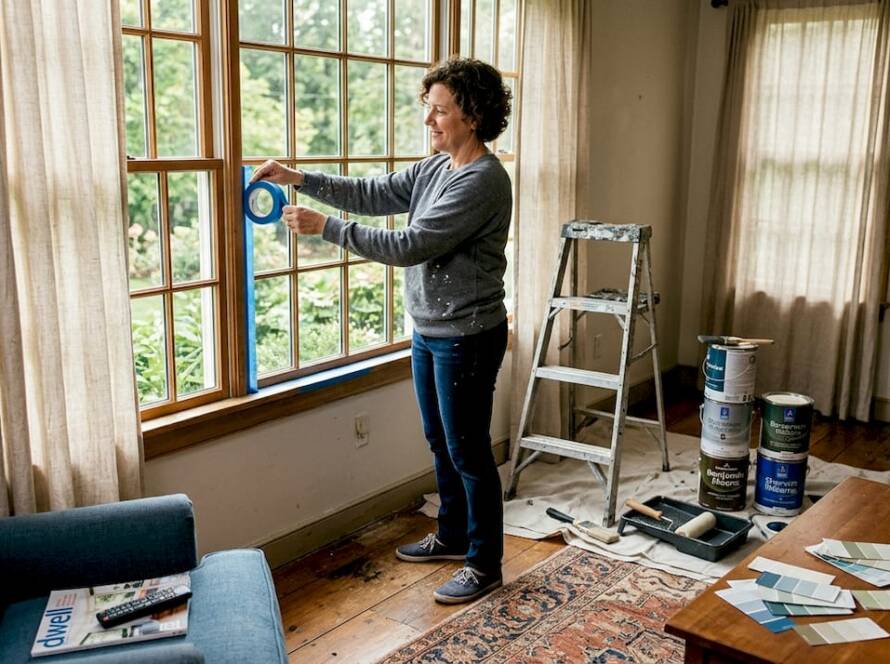
Imagine hiring a contractor who seemed perfect on paper, only to watch your kitchen remodel drag on for months, blow past budget, and end with shoddy work you have to pay someone else to fix. It happens more often than most homeowners expect. In fact, poor contractor selection is one of the leading causes of renovation stress, financial loss, and unfinished projects. The good news is that with the right preparation and a clear screening process, you can protect yourself and find someone truly trustworthy. This guide walks you through every step, from setting your goals to signing a solid contract.
Table of Contents
- What to prepare before you search for contractors
- Screening contractors: Where to look and what to check
- Essential credentials: Licensing, insurance, and legal proof
- Warning signs and how to spot risky contractors
- Final steps: Contracts, site visits, and communication checks
- A hard-earned perspective: Why doing your homework pays off
- Renovation success starts with the right partner
- Frequently asked questions
Key Takeaways
| Point | Details |
|---|---|
| Preparation matters most | Define goals, budget, and criteria before reaching out to contractors. |
| Always verify credentials | Check licenses, insurance, and references for every contractor you consider. |
| Watch out for red flags | Avoid large upfront deposits, no contracts, and offers too good to be true. |
| Contract details are essential | Get everything in writing, visit active work sites, and clarify communication. |
| Experience beats the lowest price | Seasoned contractors with solid reputations deliver the best results in the long run. |
What to prepare before you search for contractors
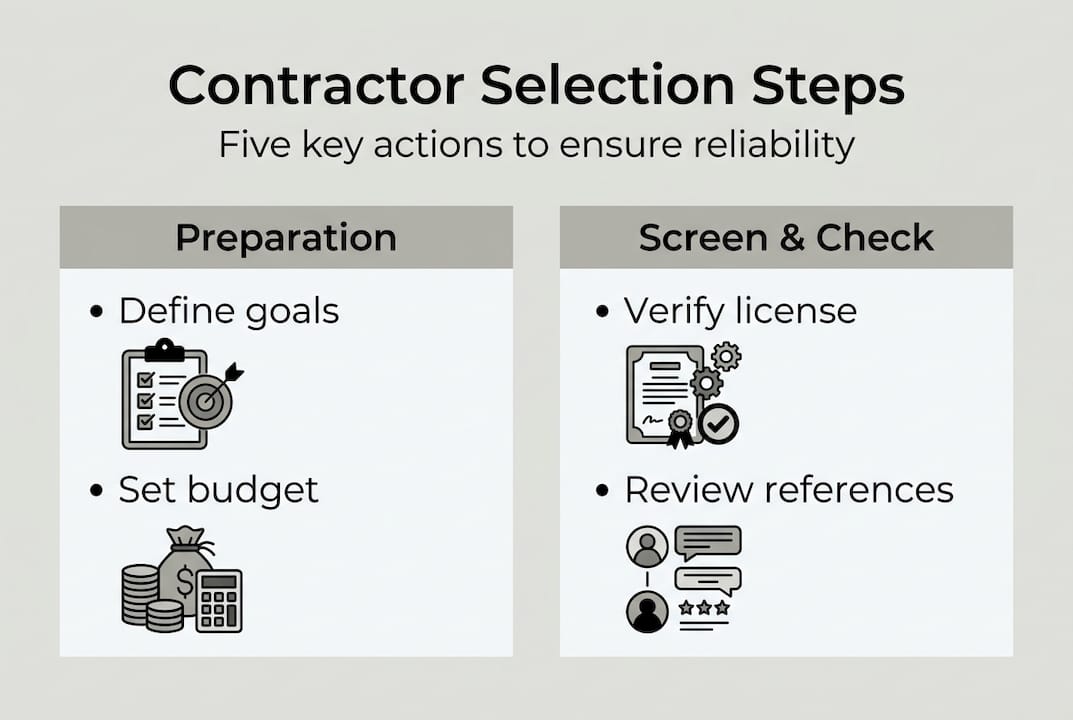
Now that you recognize the risks of choosing carelessly, start with these vital preparation steps. Before you call a single contractor, get clear on what you actually want. Vague goals lead to vague bids, and vague bids lead to confusion, change orders, and cost overruns. The more specific you are upfront, the easier it becomes to compare contractors fairly.
Start by writing down your renovation goals and your non-negotiables. Do you need more square footage, a modernized kitchen, or a finished basement? Separate your must-haves from your nice-to-haves. This list becomes your anchor throughout the entire process.
Next, set a realistic budget. A common mistake is budgeting only for the work you can see. Always plan a 10-20% contingency for hidden issues like outdated wiring or aging plumbing that only surface once walls open up. That buffer can be the difference between finishing your project and stopping halfway.
Document your existing property conditions with photos and notes. This protects you if disputes arise later about what was pre-existing damage versus contractor-caused damage.
Here is a quick checklist of what to prepare before reaching out:
- Written list of renovation goals and priorities
- Defined budget with a 10-20% contingency reserve
- Photos of current conditions in all areas being renovated
- Inspiration images showing the style and finishes you want
- A list of required contractor credentials (license, insurance, experience)
Pro Tip: When gathering inspiration photos, organize them by room and feature. Showing a contractor exactly what you want reduces miscommunication and helps them give you a more accurate estimate.
Also think about what kind of experience your project demands. A bathroom refresh needs different skills than a home addition. Make sure to request portfolios and references that match your project type, because expansions and structural work require contractors with specific structural experience.
| Preparation item | Why it matters |
|---|---|
| Defined scope and goals | Prevents scope creep and misaligned bids |
| Budget with contingency | Covers unexpected structural or system issues |
| Property condition photos | Protects you in case of disputes |
| Credential requirements list | Filters out unqualified candidates early |
| Inspiration portfolio | Aligns expectations before work begins |
Knowing the key questions to ask and understanding the typical remodeling timeline will also help you set realistic expectations from day one.
Screening contractors: Where to look and what to check
Once you have your requirements set, it is time to start searching for potential contractors. Not all sources are equally reliable, so knowing where to look matters as much as knowing what to look for.
Here is a step-by-step approach to building a strong candidate list:
- Ask friends, family, and neighbors first. Word of mouth from people in Lower Bucks County or New Castle who have had similar work done is your most valuable starting point. They can tell you things no review site will.
- Search Google, Yelp, Houzz, BBB, and Angi. Focus on contractors with 50-plus reviews and 4.5-plus stars. More importantly, look for patterns in the negative reviews. One complaint about delays might be a fluke. Five complaints about the same issue is a pattern.
- Check business longevity. A contractor who has been operating for three or more years has survived the early failure period that claims many new businesses. Longevity signals stability and accountability.
- Contact at least three references per contractor. Ask them specifically about communication, budget accuracy, and how problems were handled. A contractor who handles problems well is worth more than one who never has problems.
- Visit completed project sites when possible. Seeing finished work in person tells you far more than photos ever can.
Pro Tip: When calling references, ask this question: “Would you hire them again without hesitation?” The pause before the answer often tells you everything.
As you gather information, use a simple comparison table to track your findings:
| Contractor | Years in business | Review score | References checked | Red flags noted |
|---|---|---|---|---|
| Candidate A | 8 years | 4.7 stars | 3 of 3 positive | None |
| Candidate B | 2 years | 4.2 stars | 1 of 3 positive | Delayed projects |
| Candidate C | 5 years | 4.8 stars | 3 of 3 positive | None |
For more guidance on narrowing your options, read about choosing the right remodeling company and review the homeowner contractor questions specific to Bucks County homeowners.
Essential credentials: Licensing, insurance, and legal proof
With a shortlist in hand, confirm candidates are legally allowed to work on your home. This step is not optional. Hiring an unlicensed contractor is a bit like letting someone without a driver’s license take the wheel. The risk is entirely yours if something goes wrong.
Here is what to verify in Pennsylvania and Delaware:
- Pennsylvania: Contractors must hold a Home Improvement Contractor (HIC) registration. You can verify HIC registration through the PA Attorney General’s official website.
- Delaware: Delaware has no state-level contractor license, but contractors must hold a valid business license and comply with local requirements. Always confirm both.
- Liability insurance: Request a current certificate showing at least $1 million in general liability coverage. This protects your property if something is damaged during the project.
- Workers’ compensation: Every worker and subcontractor on your property must be covered. If a worker is injured and the contractor lacks workers’ comp, you could be held financially responsible.
- Subcontractor coverage: Ask specifically whether subcontractors carry their own insurance or are covered under the general contractor’s policy.
Statistic to know: Homeowners who skip insurance verification face an average liability exposure that can easily exceed the cost of the entire renovation if a worker is injured on their property.
| Credential | Pennsylvania | Delaware |
|---|---|---|
| Contractor license | HIC registration required | No state license; local requirements apply |
| Liability insurance | $1M+ recommended | $1M+ recommended |
| Workers’ compensation | Required for all workers | Required for all workers |
| Subcontractor coverage | Confirm separately | Confirm separately |
Always ask to see the actual insurance certificates, not just verbal assurances. Then call the insurance provider directly to confirm the policy is current. For more on protecting yourself from dishonest contractors, review these contractor scam warnings.

Warning signs and how to spot risky contractors
Before you commit, know these classic warning signs to sidestep major headaches. Even a contractor who looks good on paper can show troubling behavior during the bidding process. Trust those signals.
“The best predictor of future behavior is past behavior.” If a contractor pressures you, avoids paperwork, or quotes far below everyone else, those habits will follow the project from start to finish.
Here are the red flags to watch for:
- Large upfront deposit requests. A deposit above 15-30% of the total contract price is a warning sign. Legitimate contractors do not need that much cash before work begins.
- Resistance to written contracts. Any contractor who wants to work on a handshake is not a contractor you want working on your home. Period.
- Quotes that are 30% or more below competitors. A dramatically low bid usually means cut corners, missing scope, or a plan to add costs through change orders later.
- Immediate availability with pressure to decide fast. Reliable contractors are in demand. If someone can start tomorrow and is pushing you to sign today, ask yourself why they have no other work lined up.
- Repeated complaints about timelines, budgets, or communication. These are the three pillars of a successful renovation. Consistent complaints in any of these areas signal a contractor who will frustrate you at every turn.
Pro Tip: Get at least three bids for every project. This gives you a realistic sense of fair market pricing and makes outlier bids easy to spot.
For a deeper look at dishonest contractor tactics, see our guide on common contractor scams that homeowners in this area have encountered.
Final steps: Contracts, site visits, and communication checks
After filtering out risky candidates, you are ready to lock in the details and ensure a great working relationship. This final stage is where many homeowners relax too soon. Stay focused.
Follow these steps before signing anything:
- Review every line of the written contract. The contract should include the full scope of work, materials specified by brand and grade, payment schedule tied to milestones, start and completion dates, and a process for handling changes.
- Confirm subcontractor insurance in writing. In Pennsylvania and Delaware, confirm all subs are insured before work begins. This is often overlooked and can create serious liability gaps.
- Visit an active job site. Ask the contractor if you can see a current project. A clean, organized site with professional behavior signals how they will treat your home.
- Ask about daily supervision and cleanup. Who is on-site every day? Who is responsible for end-of-day cleanup? These details matter for your daily life during the renovation.
- Set clear communication expectations. Agree on how often you will receive updates, through what channel, and who your primary contact is. Miscommunication is one of the top sources of renovation conflict.
Pro Tip: Build a communication log from day one. A simple shared document or email thread where updates are recorded protects both you and the contractor if questions arise later.
For a detailed look at what belongs in a renovation contract, review this contract terms checklist to make sure nothing important is left out.
A hard-earned perspective: Why doing your homework pays off
Reflecting on years of helping homeowners in Bucks County and New Castle navigate renovations, one truth stands out: the homeowners who struggle most are the ones who rushed the selection process. They chose the lowest bid, skipped the reference calls, or trusted a contractor who seemed friendly without verifying a single credential.
Here is what most articles will not tell you. The best contractors are often booked three to six weeks out. If you need someone who can start immediately, you are working with a limited pool. Plan ahead and start your search well before your target start date.
The lowest bid is almost never the best value. Hidden costs, change orders, and stress are the real price of choosing on cost alone. We have seen homeowners spend more fixing a cheap contractor’s mistakes than they would have paid a quality contractor from the start.
Investing the time to vet candidates properly, visit job sites, and check credentials is not overcautious. It is the single most effective thing you can do to protect your home, your budget, and your sanity. Choosing the right remodeling company is not just about the project. It is about the entire experience from first call to final walkthrough.
Renovation success starts with the right partner
Ready to start your renovation journey? Here is how we can help you move forward confidently.
At Precision Remodeling Solutions, we bring verified credentials, transparent contracts, and a proven process to every project in Lower and Central Bucks County and New Castle, Delaware. Whether you are planning a kitchen remodel or a full home addition, we make the process clear and manageable. Our project timeline guide helps you understand exactly what to expect at every stage. When you are ready to talk through your goals, reach out to your trusted local remodeling partner for a free estimate and a conversation with no pressure attached.
Frequently asked questions
What is a fair deposit to pay a renovation contractor?
A fair deposit ranges from 10% to 30% of the total contract price. Anything above 30% upfront is a red flag and should prompt you to walk away.
How do I check a contractor’s license in Pennsylvania?
You can verify a PA HIC license through the Pennsylvania Attorney General’s online database, which is free and publicly accessible.
What documents should a renovation contractor provide?
Before work begins, a contractor should provide their business license, current insurance certificates, references from recent projects, and a fully written contract.
Is it risky to hire a contractor who is immediately available?
It can be. Immediate start availability combined with pressure to decide quickly is a recognized red flag, since in-demand contractors are typically booked several weeks out.