TL;DR:
- Accurate cost estimates require understanding materials, labor, scope changes, permits, and existing conditions.
- Gathering detailed measurements, project scope, and documentation aids in creating reliable budgets.
- Using multiple estimation methods and including contingency funds helps prevent budget overruns.
Remodeling your home is exciting until the first contractor quote lands in your inbox and the number is nothing like what you expected. Many homeowners in Lower and Central Bucks County and New Castle, Delaware, start projects with a rough number in mind, only to face budget overruns that cause real financial stress. The gap between what you expect and what a project actually costs usually comes down to one thing: a weak estimate. This guide walks you through every step of building a realistic cost estimate for kitchen, bathroom, and home addition projects, so you can plan with confidence and avoid the surprises that derail so many renovations.
Table of Contents
- Understand what factors drive remodeling costs
- Gather the information you need before estimating
- Use proven methods and tools to estimate costs
- Account for hidden costs and ways to reduce overruns
- What most homeowners get wrong about renovation budgeting
- Expert help for stress-free remodeling estimates
- Frequently asked questions
Key Takeaways
| Point | Details |
|---|---|
| Know your cost drivers | Materials, labor, scope, and permits have the biggest impact on your estimate. |
| Gather details early | Collect accurate measurements and desired features to build realistic estimates. |
| Choose your estimate method | Manual calculations, online tools, and contractor quotes all offer pros and cons. |
| Plan for surprises | Always set aside a contingency budget for hidden or unexpected costs. |
| Value over price | Focus on quality and long-term value, not just the lowest bid. |
Understand what factors drive remodeling costs
Before you can build a reliable estimate, you need to understand what actually makes remodeling expensive. The price of any project is not random. It reflects a combination of decisions, conditions, and requirements that stack up quickly.
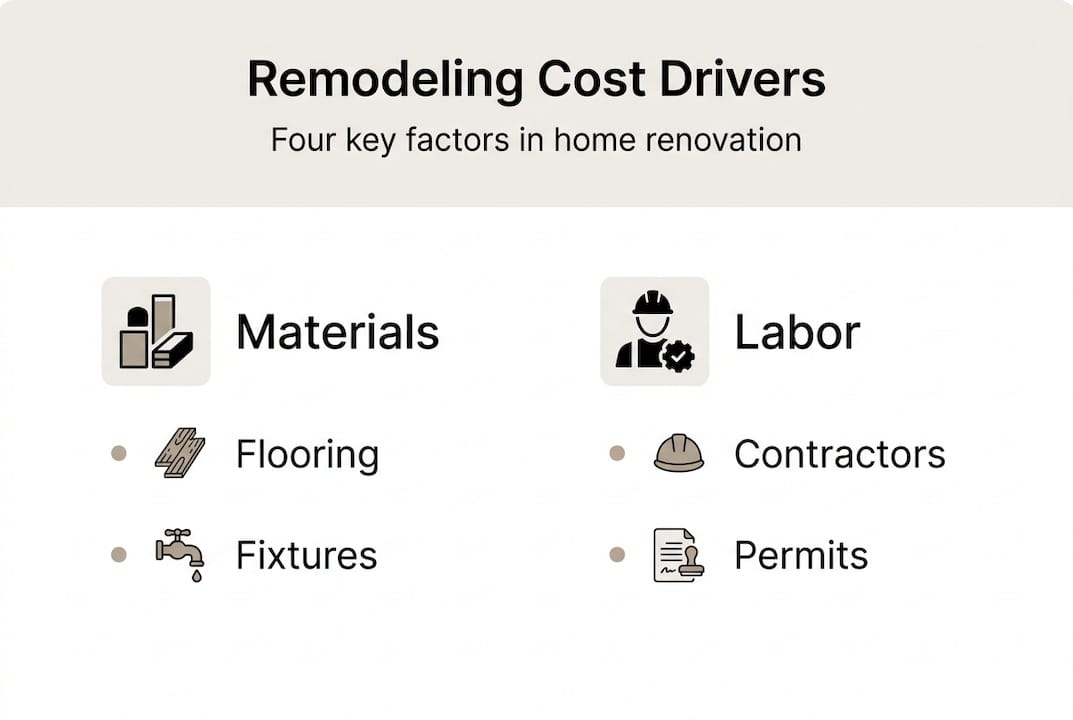
Materials, labor, project scope, and local permits are the four major cost drivers in any renovation. Materials alone can swing a budget dramatically. Choosing custom cabinetry over stock options, for example, can double your kitchen cabinet costs. Labor rates in the greater Philadelphia area and surrounding counties tend to run higher than national averages, which is worth factoring in from the start.
Layout changes are another major budget factor. Moving plumbing or electrical lines to accommodate a new floor plan adds significant cost because it requires licensed tradespeople, new materials, and often additional permits. The more you change the existing structure, the more you pay.
Here are the key cost factors to consider for each room type:
- Kitchens: Cabinet style and material, countertop selection, appliance upgrades, flooring, lighting, and whether plumbing or electrical lines need to move. Kitchen remodeling projects vary widely based on these choices.
- Bathrooms: Tile work, fixture quality, vanity type, shower or tub configuration, and ventilation. Bathroom remodeling costs rise quickly when you add heated floors or custom tile layouts.
- Home additions: Foundation work, framing, roofline integration, HVAC extension, and matching exterior finishes. Home additions carry the widest cost range of any project type.
- Permits and inspections: Required for structural work, electrical, and plumbing in most municipalities across Bucks County and New Castle.
Remodeling costs can vary by 30 to 50 percent for the same project depending on material choices, local labor rates, and the condition of existing systems.
Contractor quotes vary for the same reason. One contractor may include permit fees and debris removal; another may not. Always ask what is and is not included. Knowing the questions to ask before hiring a contractor helps you compare quotes on equal footing.
Pro Tip: Ask every contractor to itemize their quote by category: materials, labor, permits, and contingency. This makes comparison far more useful than comparing a single bottom-line number.
Gather the information you need before estimating
With cost drivers in mind, the next step is to gather all the details your estimate will depend upon. Walking into an estimation process without this information is like trying to plan a road trip without knowing your starting point.
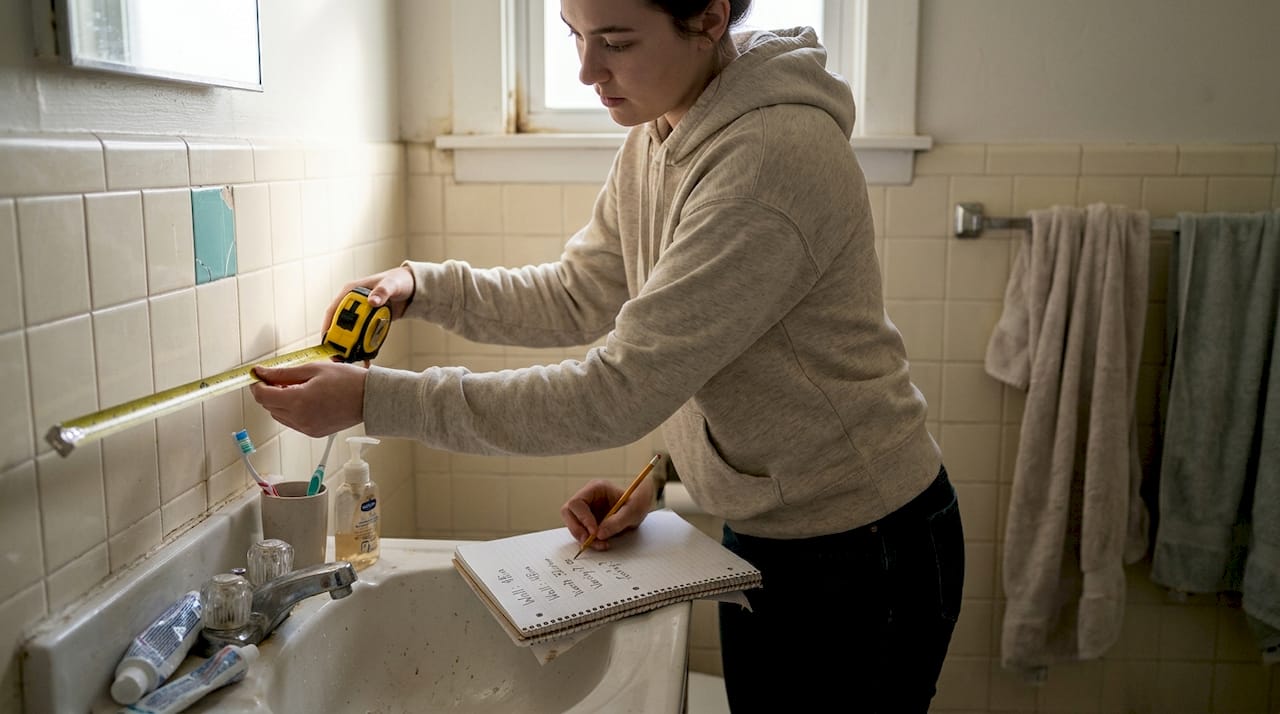
Accurate measurements and a clear project scope directly increase estimate accuracy. A bathroom measured at 60 square feet will cost very differently to remodel than one at 100 square feet, even with identical finishes.
Here is a summary of what you need to gather before estimating:
| Project type | Key measurements | Feature decisions | Existing conditions |
|---|---|---|---|
| Kitchen | Room dimensions, ceiling height | Cabinet style, appliance type, countertop material | Age of plumbing, electrical panel capacity |
| Bathroom | Floor area, wall height | Tile type, fixture grade, shower vs. tub | Subfloor condition, existing ventilation |
| Home addition | Footprint, stories, connection point | Room purpose, HVAC needs, exterior finish | Soil conditions, existing foundation type |
Beyond measurements, you will also want to prepare the following documents before reaching out to contractors:
- A written wish list of features ranked by priority
- Any existing floor plans or sketches of the space
- Photos of the current condition, including any visible damage
- Notes on HOA restrictions or local zoning requirements
- Your target timeline and any non-negotiable deadlines
Local codes in Bucks County and New Castle can affect what is allowed, especially for planning for family expansion through an addition or in-law suite. Some townships have setback requirements that limit how far an addition can extend toward a property line.
For bathroom renovation planning, note whether you are working with a primary bath, guest bath, or powder room. Each has different scope expectations and cost norms.
Pro Tip: Before your first contractor meeting, spend 20 minutes writing down your must-haves versus your nice-to-haves. This single step reduces back-and-forth negotiations and helps contractors give you a more accurate first quote.
Use proven methods and tools to estimate costs
Once you have your project details, you can choose the best method to build your estimate. There is no single right approach. Most homeowners benefit from using more than one method and then comparing results.
Here are three estimation approaches, step by step:
- Manual cost breakdown: List every element of the project (cabinets, countertops, labor, permits) and research current prices for each. Add them up and include a contingency buffer. This takes time but gives you the most control.
- Online calculator: Use a reputable remodeling cost calculator to get a ballpark figure based on your zip code, room size, and finish level. Digital calculators streamline cost estimates but should be verified with at least one contractor quote.
- Contractor quote: Request itemized quotes from two or three licensed contractors. This is the most accurate method because it reflects real local pricing and actual project conditions.
Here is how these three methods compare:
| Method | Accuracy | Time required | Cost to use | Best for |
|---|---|---|---|---|
| Manual breakdown | Moderate | High | Free | Early planning |
| Online calculator | Low to moderate | Low | Free | Quick ballpark |
| Contractor quote | High | Moderate | Free | Final budgeting |
For the most grounded perspective on what projects return in your area, cross-reference your estimate with the 2025 Cost vs. Value Report, which tracks average remodeling costs and resale returns by region. It is a useful reality check before you commit to a scope.
Understanding the timeline of a remodeling project also helps you estimate soft costs like temporary housing, storage, or eating out during a kitchen renovation. These are real expenses that rarely appear in contractor quotes.
Account for hidden costs and ways to reduce overruns
Even the best estimates can miss important details. Here is how to protect your budget from the costs that catch homeowners off guard.
Unplanned repairs and permit fees are among the leading causes of budget overruns. Older homes in Bucks County and New Castle frequently hide issues behind walls and under floors that only become visible once work begins.
Common hidden costs by project type include:
- Kitchen: Water damage behind the sink cabinet, outdated wiring that needs upgrading to support new appliances, asbestos floor tile under existing flooring in homes built before 1980
- Bathroom: Rotted subfloor from years of slow leaks, mold remediation, and lead pipe replacement in older homes
- Home addition: Unexpected soil conditions requiring deeper footings, utility line relocation, and code-required fire separation between new and existing spaces
- All projects: Permit delays that extend labor costs, disposal fees for demolition debris, and temporary utility connections
You can also review remodeling cost factors from the National Association of Home Builders for a broader view of what drives prices nationally.
Most remodeling professionals recommend setting aside 10 to 20 percent of your total project budget as a contingency reserve. For older homes, lean toward 20 percent.
To reduce overruns, focus on decisions that offer strong returns. Understanding the cost vs. value of a home addition helps you decide where to invest and where to scale back. Not every upgrade pays off equally at resale.
Pro Tip: Ask your contractor if they have supplier relationships that offer discounts on materials. Many established remodelers in the area buy at trade pricing and can pass savings to you, especially on tile, cabinetry, and fixtures.
When choosing the right remodeling company, look for transparency about contingency planning. A contractor who addresses potential hidden costs upfront is far more trustworthy than one who promises a suspiciously low number.
What most homeowners get wrong about renovation budgeting
Here is something we see repeatedly: homeowners focus almost entirely on the lowest bid and then wonder why the project went sideways. Chasing the lowest number is one of the most expensive mistakes you can make in remodeling.
A low bid often means something was left out. Maybe the contractor skipped the permit fees, excluded debris removal, or underestimated labor hours. You find out mid-project when change orders start arriving. By then, you have little leverage.
The smarter move is to build a priority list before you talk to anyone. Decide what you absolutely need, what you would like, and what you can skip. This gives you real control over scope and cost without depending on a contractor to manage your budget for you.
We also see homeowners skip the best ROI for bathroom remodel analysis entirely and spend heavily on features that add little resale value. Total value, not just the lowest quote, should drive every remodeling decision you make.
Expert help for stress-free remodeling estimates
Ready to get your remodeling project underway with confidence? Here is how we can help.
At Precision Remodeling Solutions, we know that an accurate estimate is the foundation of a successful project. Our team works with homeowners across Lower and Central Bucks County and New Castle, Delaware, to provide detailed, transparent quotes with no guesswork.
Whether you are planning a full kitchen overhaul with our trusted kitchen remodeling experts, refreshing your bathrooms with our skilled bathroom remodelers, or expanding your living space with custom home additions, we are ready to walk you through every cost detail. Contact us today to schedule your free in-home estimate and start your project with a number you can actually trust.
Frequently asked questions
What is the average cost to remodel a kitchen in Bucks County?
Kitchen remodeling in Bucks County typically ranges from $25,000 to $60,000 depending on the size of the space and the finish level you choose. Custom cabinetry, high-end appliances, and layout changes push costs toward the higher end of that range.
How much does a bathroom remodel cost and what impacts the price?
Bathroom remodels usually cost between $12,000 and $28,000, with price variations driven by tile selection, fixture grade, and whether the layout changes. Adding a walk-in shower or heated flooring will move your budget toward the upper range.
Can I estimate remodeling costs on my own or should I get professional help?
You can start with online calculators to get a general sense of costs, but expert quotes are essential for accuracy because they account for your home’s actual conditions and local permit requirements.
What hidden costs should I prepare for in a remodeling project?
Common hidden costs include structural repairs, permit fees, and code updates that only surface once walls are opened. Unplanned costs are a leading reason projects run over budget, which is why a 10 to 20 percent contingency reserve is strongly recommended.
Recommended
- Home remodeling explained: what it is and how it works – Precision Remodeling Solutions
- The Remodeling Timeline: What to Expect from Start to Finish
- Top Remodeling Trends That Add Value to Your Home
- Why remodel for family expansion? 5 key benefits – Precision Remodeling Solutions
- Maximize your remodeling investment with plumbing upgrades – AG-Plumbing
- Electricians in UK renovations: roles, costs & compliance