TL;DR:
- Sustainable remodeling reduces energy bills by 50 to 80% through strategic upgrades.
- It prioritizes energy efficiency, durable materials, indoor air quality, and whole-home design.
- Early planning and local incentives make sustainable home improvements cost-effective and impactful.
Imagine cutting your home’s energy bills by more than half while breathing cleaner air and living in a more comfortable space. That’s not a sales pitch. Energy savings of 50 to 80% are achievable through deep sustainable remodeling, and homeowners across the country are proving it project by project. If you’ve been curious about what sustainable remodeling actually involves, how much it costs, and whether it makes sense for your home in Lower or Central Bucks County or New Castle, Delaware, this guide walks you through everything. From core principles to real savings data, we cover what you need to know to make a confident decision.
Table of Contents
- What is sustainable remodeling?
- Core methods and approaches for sustainable remodeling
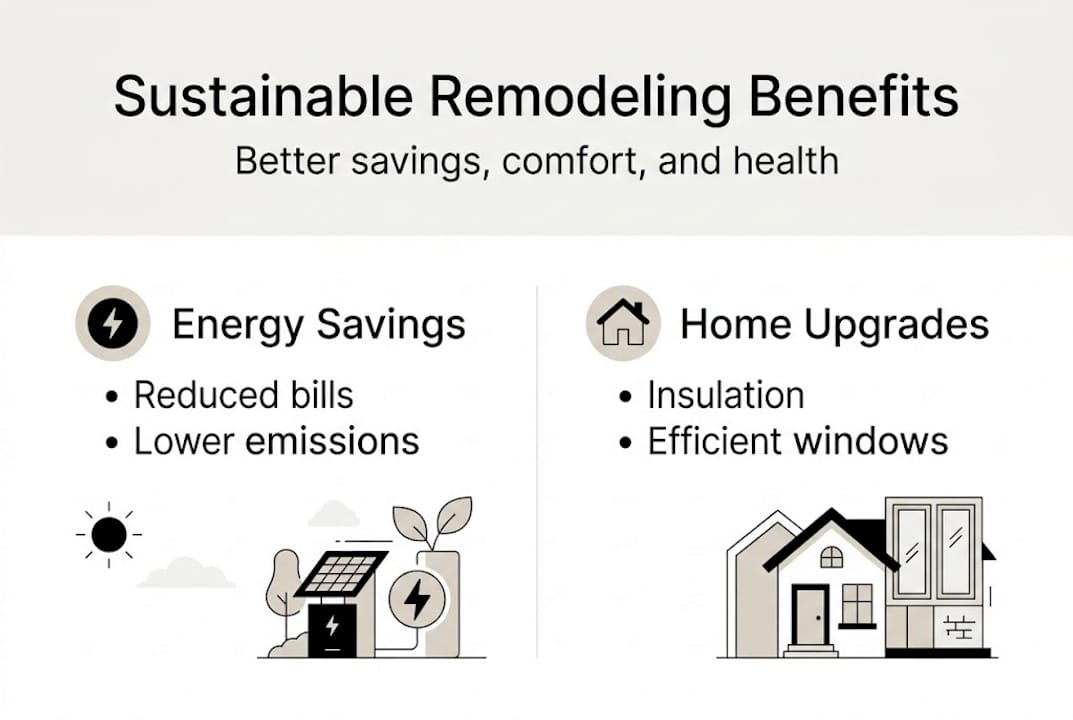
- Benefits: Savings, comfort, health, and the environment
- Key challenges, costs, and solutions for homeowners
- Why sustainable remodeling isn’t just a trend: A local perspective
- Ready to remodel sustainably? Local experts can help
- Frequently asked questions
Key Takeaways
| Point | Details |
|---|---|
| Major cost savings | Sustainable remodeling can cut energy bills by over 50%, quickly offsetting upfront costs. |
| Healthier, more comfortable homes | Proper upgrades improve indoor air quality, lower drafts, and create a more comfortable space. |
| Environmental benefits | Using greener materials and energy upgrades reduces a home’s environmental impact significantly. |
| Incentives ease costs | Federal IRA tax credits and local rebates help homeowners afford sustainable remodels. |
| Best results from planning | Focusing on insulation and air sealing first ensures the highest return and long-term value. |
What is sustainable remodeling?
Sustainable remodeling is the practice of renovating your home in ways that reduce resource use, lower environmental impact, and improve the long-term performance of the building. It’s different from standard remodeling in a few important ways. While what home remodeling is typically focuses on aesthetics and function, sustainable remodeling layers in energy efficiency, material selection, indoor air quality, and durability as equal priorities.
Think of it this way: a standard kitchen update might swap out cabinets and countertops for a fresh look. A sustainable kitchen update does the same thing, but also considers where those materials came from, how long they’ll last, and whether the new layout reduces energy waste. The result is a home that looks great and performs better for years to come.
Core principles of sustainable remodeling include:
- Energy efficiency: Reducing the amount of power your home consumes through better insulation, windows, and systems
- Sustainable materials: Choosing products with recycled content, low chemical emissions, and responsible sourcing
- Indoor air quality: Eliminating toxins and improving ventilation so the air inside your home is healthier
- Water conservation: Installing fixtures and systems that reduce water waste
- Durability and longevity: Selecting materials and methods that hold up over time, reducing the need for frequent replacements
- Whole-home thinking: Treating your home as a connected system rather than a series of isolated rooms
This last point matters more than most people realize. Exterior remodeling basics like siding and roofing choices directly affect how well your home holds heat in winter and stays cool in summer.
“Deep retrofits don’t just save energy. They deliver health benefits including better indoor air quality and fewer pest issues, especially when integrated design guides the process from the start.”
The health and comfort angle is often what surprises homeowners most. Fewer drafts, less moisture, and cleaner air aren’t just nice to have. They make daily life noticeably better.
Core methods and approaches for sustainable remodeling
Knowing what sustainable remodeling is gets you started. Knowing how it’s done helps you plan. The process generally follows these steps:
- Assess your home’s current performance. A home energy audit identifies where you’re losing heat, wasting water, or using outdated systems.
- Set goals and design around them. Decide whether you’re targeting energy savings, better air quality, reduced water use, or all three. Your design should reflect those priorities.
- Choose materials thoughtfully. Look for recycled content, locally sourced products, and low-VOC (volatile organic compound) paints and finishes. Low-VOC simply means fewer harmful chemicals off-gassing into your home.
- Implement upgrades in a logical order. Start with the building envelope (insulation and air sealing) before upgrading appliances or systems.
- Verify results. After major upgrades, a follow-up energy audit confirms whether you hit your targets.
Here’s a quick comparison of how traditional and sustainable approaches differ:
| Factor | Traditional remodeling | Sustainable remodeling |
|---|---|---|
| Energy use | Often unchanged | Reduced 50 to 80% in deep retrofits |
| Materials | Standard, lowest cost | Recycled, local, low-emission |
| Indoor air quality | Rarely prioritized | Central to the design |
| Cost savings over time | Minimal | Significant, often $1,500+ per year |
| Durability | Varies | Prioritized for long-term performance |
Pro Tip: Don’t rush to buy a new HVAC system before sealing your home’s envelope. Air leaks and poor insulation mean your new system works harder than it should. Fix the shell first, then upgrade the equipment.
For kitchens specifically, remodeling tips for kitchens show how even modest layout and material changes can reduce energy use and improve functionality at the same time. The key is integrated thinking from day one.
Real-world projects confirm the numbers. Energy savings of 50 to 80% are documented in deep retrofit case studies, with some homes dropping air leakage by nearly 90%.
Benefits: Savings, comfort, health, and the environment
This is where sustainable remodeling gets exciting. The payoffs are real, measurable, and often faster than homeowners expect.
Let’s look at some documented results:
| Project location | Energy savings | Annual cost savings |
|---|---|---|
| North Vancouver, BC | 77.8% | Significant reduction in utility bills |
| Penticton, BC | 54% | $1,500 per year |
| Toronto, ON | 58% | $1,831 per year |
Those aren’t projections. Those are real homes that went through deep retrofits and tracked the results.
Beyond the numbers, here’s what homeowners actually experience after sustainable remodeling:
- More consistent temperatures throughout the home, with fewer cold spots near windows or exterior walls
- Lower monthly utility bills that free up budget for other priorities
- Improved air quality that benefits anyone with allergies, asthma, or respiratory sensitivities
- Reduced pest intrusion because better air sealing closes the gaps insects and rodents use to enter
- Higher home value as energy-efficient homes attract buyers who factor in operating costs
For homeowners thinking about estimating remodeling costs, it’s worth factoring in these ongoing savings when comparing project budgets. A project that costs more upfront but saves $1,500 a year looks very different over a 10-year horizon.
The environmental side matters too. Reducing your home’s energy consumption directly lowers carbon emissions. When you pair that with responsible material choices, the impact compounds over time. You’re not just improving your home. You’re reducing the load on the grid and contributing to a healthier local environment in Bucks County and New Castle.
Key challenges, costs, and solutions for homeowners
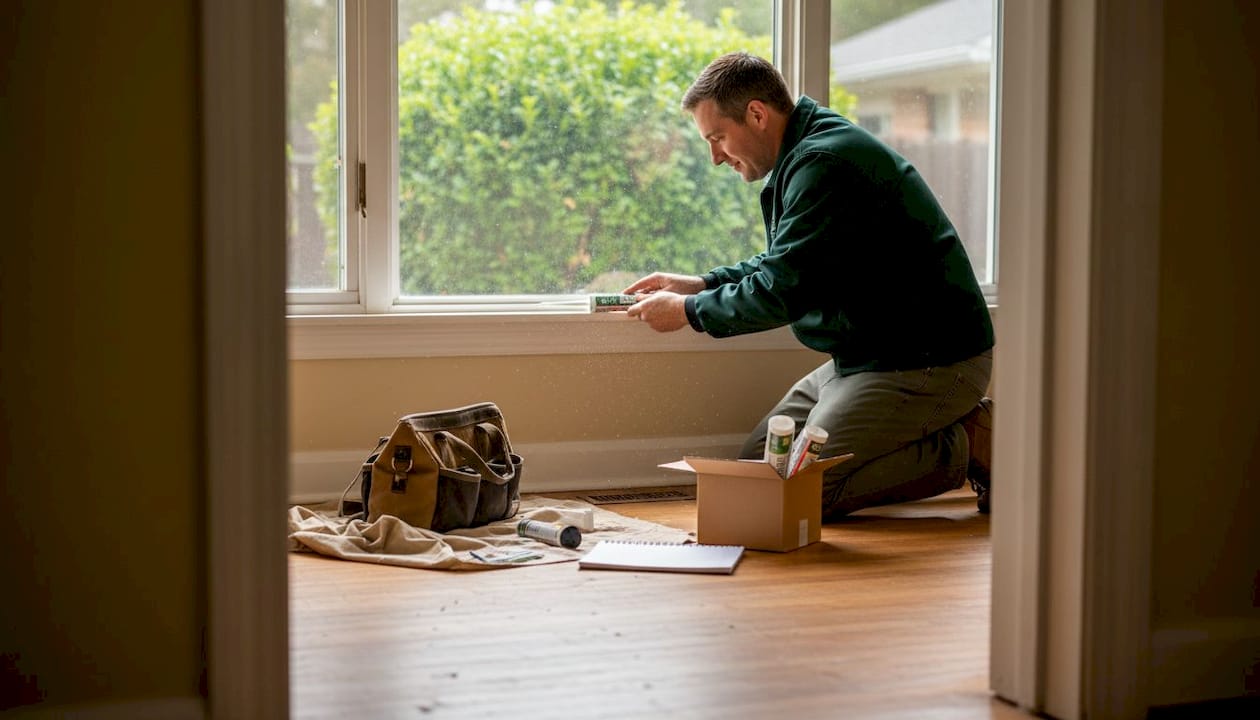
Honesty matters here. Sustainable remodeling isn’t without its hurdles, and going in with clear expectations sets you up for success.
The most common challenges include:
- Higher upfront costs. Sustainable materials and energy upgrades often cost more initially than standard alternatives. Higher upfront costs and supply chain issues are real barriers, though incentives are changing the math.
- Material availability. Not every sustainable product is easy to source locally, which can affect timelines.
- Design complexity. Whole-home thinking requires more planning and coordination than a straightforward cosmetic update.
- Longer timelines. Thorough audits, custom material orders, and phased upgrades can stretch a project schedule.
Here’s how to work through each of these:
- Use available incentives. The Inflation Reduction Act (IRA) offers federal tax credits for energy upgrades including insulation, windows, heat pumps, and more. Pennsylvania and Delaware also have local rebate programs worth researching before you budget.
- Plan material sourcing early. Work with your contractor to identify sustainable materials at the design stage, not after the project starts.
- Hire contractors with sustainable design experience. Complexity is manageable when your team has done it before.
- Phase your upgrades. You don’t have to do everything at once. Start with the highest-impact improvements and build from there.
For families thinking about longer-term planning, remodeling for growing families and sustainable upgrades can go hand in hand. Better insulation and air quality benefit everyone in the household, especially children. And when you look at bathroom remodeling ROI, adding water-efficient fixtures is one of the easiest sustainable wins with strong resale value.
Pro Tip: Start with your attic insulation and air sealing. These two upgrades consistently deliver the fastest payback and make every other upgrade more effective.
Why sustainable remodeling isn’t just a trend: A local perspective
We hear a version of the same concern from homeowners all the time: “Sustainable remodeling sounds expensive and complicated.” That thinking is understandable, but it’s also outdated.
The reality is that incentives, better materials, and experienced contractors have shifted the equation significantly. The remodeling trends that add value consistently point toward energy efficiency and sustainability as top drivers of both comfort and resale price.
Here’s what most articles won’t tell you: the homeowners who delay sustainable upgrades often end up spending more in the long run, paying higher utility bills year after year while living in less comfortable homes. The upfront investment isn’t a sacrifice. It’s a reallocation of money you’d spend anyway, just more strategically.
In Lower and Central Bucks County and New Castle, Delaware, where older housing stock is common, the opportunity for meaningful improvement is significant. These homes respond well to envelope upgrades and air sealing. The payback periods are real, and the comfort gains are immediate. Don’t let the myth of complexity stop you from a decision that pays for itself.
Ready to remodel sustainably? Local experts can help
If this guide has you thinking seriously about your next project, that’s exactly the right response. Sustainable remodeling works best when you have an experienced local contractor who understands both the technical side and the regional context of homes in Bucks County and New Castle.
At Precision Remodeling Solutions, we work with homeowners to design and execute upgrades that deliver real results. Whether you’re interested in kitchen remodeling services, bathroom remodeling services, or exterior remodeling options, we bring sustainable thinking to every project. Reach out today for a free estimate and let’s talk about what’s possible for your home.
Frequently asked questions
How does sustainable remodeling compare to regular remodeling?
Sustainable remodeling uses environmentally responsible materials, prioritizes energy efficiency, and targets long-term savings, while standard remodeling often focuses mainly on appearance and function. Deep retrofits preserve 75 to 80% of existing structure to reduce embodied carbon, which standard projects rarely consider.
What incentives are available for sustainable home remodeling in my area?
Federal programs like the Inflation Reduction Act offer tax credits for energy upgrades including insulation, windows, and heat pumps, and both Pennsylvania and Delaware have local rebate programs that can further offset costs.
Can sustainable remodeling really save me money in the long run?
Yes. Documented projects show annual savings of $1,500 or more, with some homes reducing energy use by over 77%, which adds up quickly against the initial investment.
What is the best place to start with sustainable remodeling?
Begin with your home’s envelope: insulation and air sealing. Prioritizing the envelope over new appliances or systems delivers the biggest performance gains and makes every subsequent upgrade more effective.
Recommended
- The value of local remodeling companies for homeowners – Precision Remodeling Solutions
- Small Kitchen, Big Impact: Remodeling Tips for Homes in Bristol, PA – Precision Remodeling Solutions
- Home remodeling explained: what it is and how it works – Precision Remodeling Solutions
- Top Remodeling Trends That Add Value to Your Home