TL;DR:
- Home improvement includes repairs, renovations, expansions, and upgrades, not just cosmetic changes.
- Local permits in Bucks and New Castle ensure safety and compliance for major projects.
- Proper planning, sequencing, and licensed professionals are essential for lasting project success.
Home improvement means a lot more than picking new paint colors or swapping out cabinet hardware. For homeowners in Lower and Central Bucks County and New Castle, Delaware, it covers everything from structural repairs and energy upgrades to full room additions and system overhauls. Done right, it raises your comfort, protects your investment, and keeps your home safe for your family. Done wrong, it can cost you far more than the original budget. This guide walks you through exactly what home improvement is, how local regulations shape your project, and how to plan and execute improvements that hold up for years.
Table of Contents
- Home improvement explained: Definition, scope, and common projects
- Navigating permits and regulations in Bucks County and New Castle
- Planning a successful home improvement project
- Choosing the right professionals for your project
- What most homeowners misunderstand about home improvement (& what actually creates lasting value)
- Ready to start your home improvement project?
- Frequently asked questions
Key Takeaways
| Point | Details |
|---|---|
| Know your project | Distinguish home improvement from maintenance and understand which upgrades best fit your needs. |
| Follow local rules | Most renovations in Bucks and New Castle require permits and licensed pros to comply with local codes. |
| Plan before you start | A clear scope, proper sequencing, and accurate budgeting reduce delays and costly mistakes. |
| Choose experts wisely | Hiring licensed, reputable contractors protects your investment and ensures top-quality outcomes. |
| Focus on lasting value | Upgrades that boost daily function and comfort drive the highest satisfaction, not just resale value. |
Home improvement explained: Definition, scope, and common projects
Home improvement is a broad term that covers any work done to a residential property to improve its condition, function, appearance, or value. It includes renovations (restoring or updating existing spaces), repairs (fixing what is broken), expansions (adding square footage), and upgrades (replacing systems or features with better versions). It is different from routine maintenance, which is the ongoing upkeep that prevents deterioration. Replacing a leaky faucet is maintenance. Gutting and redesigning your kitchen is home improvement.
Understanding that distinction matters because it affects your budget, your permit requirements, and the professionals you need to hire. A quick fix rarely needs a permit. A structural change almost always does.
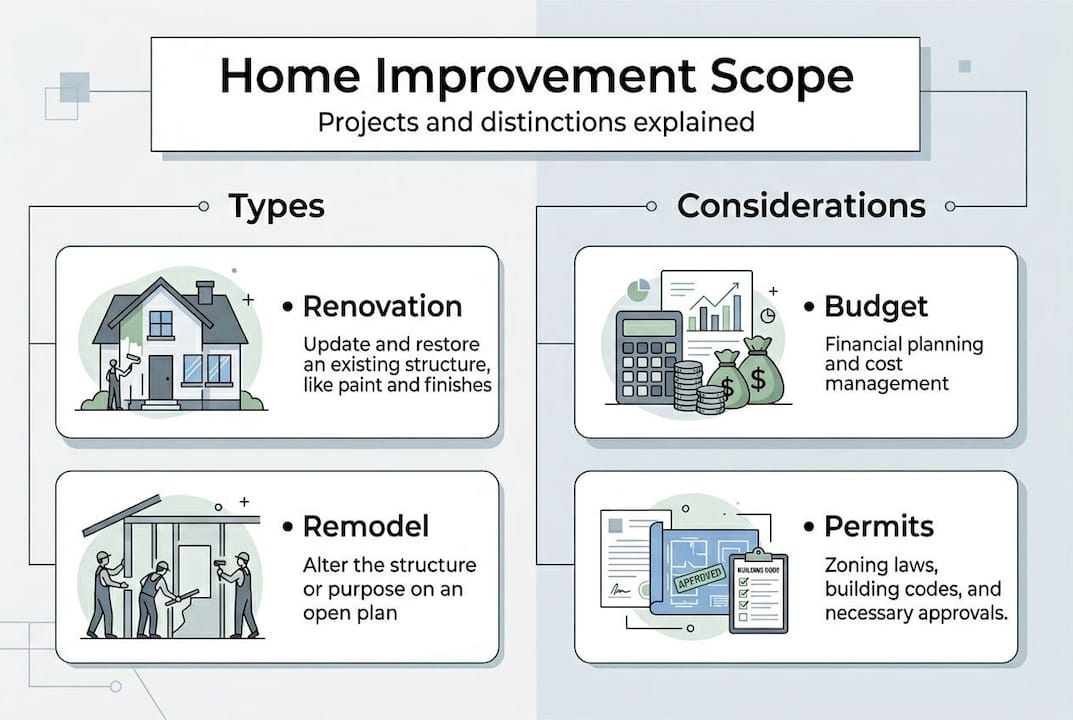
Here is a look at common project types, along with typical joy scores and cost recovery data from the 2025 Remodeling Impact Report:
| Project type | Joy score (out of 10) | Estimated cost recovery |
|---|---|---|
| Primary bedroom suite addition | 9.8 | High |
| Kitchen upgrade | 9.8 | High |
| New roofing | 9.6 | High |
| Steel entry door replacement | 9.7 | Very high |
| Closet renovation | 9.4 | Moderate to high |
| Basement finish | 9.1 | Moderate to high |
You can also explore top remodeling trends that consistently add value in our region.
Why do Bucks and New Castle homeowners pursue these projects? The reasons vary, but they tend to cluster around a few core motivations:
- Worn-out finishes and aging systems that affect daily comfort
- Energy efficiency goals and rising utility costs
- Desire to increase resale value before listing
- Need for more functional space as families grow or change
- Safety concerns tied to outdated electrical, plumbing, or structural elements
“In 2024, U.S. homeowners spent $603 billion on home improvement and repairs.”
That number reflects just how central home improvement has become to how Americans manage and grow their most valuable asset.
Navigating permits and regulations in Bucks County and New Castle
Understanding the types of projects you might tackle makes it important to grasp how local rules shape the process. Permits are not just bureaucratic hurdles. They protect you by ensuring work is inspected and meets safety standards. Skipping a required permit can void your homeowner’s insurance, create problems when you sell, and leave you liable for unsafe conditions.

Both Bucks County, PA, and New Castle County, DE, require permits for major changes to residential structures. Here is how the two areas compare:
| Factor | Bucks County, PA | New Castle, DE |
|---|---|---|
| Governing code | PA Uniform Construction Code (UCC) | 2021 IBC, IRC, and IECC |
| Who issues permits | Local township building office | New Castle County or municipality |
| Common triggers | Decks, additions, garages, basement finishes | Same, plus mechanical and plumbing |
| Special considerations | Some historic districts with added review | Stricter rules for historic and flood zones |
| Contractor licensing | Required for specialty trades | Licensed contractors required for all major trades |
Most townships in both areas now offer online permit applications, which speeds up the process considerably. Still, the steps remain consistent:
- Research whether your specific project requires a permit by contacting your local building office.
- Prepare and submit your application with project drawings or specifications.
- Schedule required inspections at each phase of work (framing, rough-in, final).
- Obtain a certificate of occupancy or permit closure when work is complete.
Unique local challenges include historic district overlays in parts of Bucks County, floodplain requirements near the Delaware River, and New Castle’s stricter licensing rules for plumbing and mechanical work. If your property sits in one of these areas, budget extra time for the approval process.
Planning a successful home improvement project
Armed with the basics of local requirements, it is time to look at how to actually plan a smooth, successful home improvement. Good planning is what separates projects that finish on time and on budget from those that drag on for months with surprise costs.
Start by identifying your goals clearly. Are you improving function, increasing energy efficiency, preparing for resale, or simply making your home more enjoyable? Your answer shapes every decision that follows, from scope to budget to materials. You can review remodeling timelines to set realistic expectations before you begin.
Here are the key planning steps in order:
- Define your project scope in writing, including what is and is not included.
- Set a realistic budget with a 10 to 15 percent contingency for unexpected costs. Use resources like estimating project costs to get started.
- Sequence the work correctly: demolition first, then structural, then rough-in trades, then insulation, then drywall, then finishes.
- Secure permits before work begins, not after.
- Order materials early to avoid supply delays that push your timeline.
Pro Tip: Always schedule HVAC rough-in before plumbing and electrical rough-in. These systems compete for the same wall and ceiling cavities, and getting HVAC in first prevents costly rework later.
Common pitfalls to avoid:
- Starting without a written scope, which leads to disputes and scope creep
- Rushing sequencing to save time, which often causes 35% budget overruns when walls need reopening
- Skipping inspections to move faster, which creates code violations and safety risks
- Underestimating lead times for windows, cabinets, and specialty materials
Timeline expectations vary by project size. A bathroom remodel typically takes two to four weeks. A kitchen renovation runs four to eight weeks. A home addition or basement finish can take three to six months. If you are planning a home addition, factor in permit approval time, which can add several weeks in Bucks and New Castle.
Choosing the right professionals for your project
Even the best-planned projects rely on skilled professionals. Here is how to choose right for Bucks and New Castle. Hiring the wrong contractor is one of the most expensive mistakes a homeowner can make. It is not just about cost overruns. It is about safety, code compliance, and whether your project holds up over time.
Licensing and insurance are not optional details. New Castle requires licensed contractors for plumbing, electrical, and HVAC work. Bucks County follows PA UCC requirements for specialty trades. Hiring an unlicensed contractor is like letting an unlicensed driver take the wheel. The risk is real, and you carry it.
When interviewing contractors, ask these questions:
- How many similar projects have you completed in this area?
- Can you provide three recent references I can contact?
- Are you licensed and insured in Pennsylvania or Delaware, as applicable?
- Will you provide a written contract with a detailed scope and payment milestones?
- How do you handle change orders, and will they be documented in writing?
- What warranty do you offer on labor and materials?
Pro Tip: Never sign a contract that only describes the project verbally. Always request a written scope with milestones, material specifications, and a clear payment schedule before any work begins.
Local referral sources are valuable. Ask neighbors who have completed similar projects, check online reviews, and review contractor portfolios carefully. A strong portfolio shows consistency across different project types. You can start your search by reviewing guidance on choosing reliable contractors or learn more about finding a local remodeling company that fits your needs. For roofing specifically, there are practical steps covered in hiring a roofing contractor that apply broadly to contractor selection.
What most homeowners misunderstand about home improvement (& what actually creates lasting value)
Now that you know the steps, let us address what really delivers satisfaction and what most people get wrong.
Most homeowners approach improvement projects with resale value as the primary goal. That is understandable, but it often leads to poor decisions. Chasing trends, over-finishing for the neighborhood, and prioritizing appearance over function are common traps. The data tells a different story. 64% of homeowners stay longer after a major remodel driven by joy and function, not price gains.
The projects that deliver the most lasting satisfaction are the ones that fix real problems and improve how you actually live in your home. A better-functioning kitchen you use every day outperforms a trendy accent wall every time.
Sequencing and inspections matter more than most homeowners realize. Skipping an inspection to save a week can mean reopening walls six months later. That is not a minor inconvenience. It is a budget disaster. We have seen it happen.
Our honest advice: start with what genuinely bothers you about your home. Prioritize comfort, function, and code compliance before aesthetics. The cost vs. value of home additions is real, but it is maximized only when the work is done right the first time.
Ready to start your home improvement project?
If you are ready to move from planning to action, working with an experienced local team makes the entire process smoother and less stressful. At Precision Remodeling Solutions, we handle everything from permits and sequencing to final finishes, so you do not have to manage it all yourself.
Whether you are thinking about kitchen remodeling services, basement finishing, or a full bathroom remodeling transformation, we bring the local knowledge and hands-on experience your project deserves. Browse our portfolio for inspiration, or contact us today for a free estimate. The right help is closer than you think.
Frequently asked questions
Which home improvements add the most value in Bucks or New Castle?
Kitchen upgrades, primary bedroom suite additions, and new roofing consistently deliver the highest return and satisfaction for homeowners in our region.
Do I need a permit to finish my basement in Bucks County?
Yes. Permits are required for major interior changes like finishing a basement, and your local township building office coordinates this under the PA Uniform Construction Code.
What if my project is in a historic district or flood zone?
You will face additional permitting requirements, longer timelines, and stricter materials rules. Always check with your local building office first, especially in New Castle’s regulated zones.
What is the difference between a renovation, remodel, and home improvement?
Home improvement is the broad category covering all residential upgrades, while renovations restore existing spaces and remodels change layouts, systems, or structural elements.
How can I avoid common home improvement mistakes?
Sequence work carefully, never skip inspections, and always use licensed professionals. Poor sequencing alone can cause budget overruns of 35 percent or more on mid-size projects.
Recommended
- Home remodeling explained: what it is and how it works – Precision Remodeling Solutions
- Home Remodeling in Bucks County, PA | Our Services
- Choosing the Right Contractor in Bucks County: What Every Homeowner Should Ask – Precision Remodeling Solutions
- Home Additions That Boost Property Value in Lower Bucks County – Precision Remodeling Solutions