TL;DR:
- Choosing the right contractor type depends on the project’s scope and specialization.
Choosing a contractor feels straightforward until something goes wrong. Many homeowners in Lower and Central Bucks County and New Castle, Delaware assume that any licensed contractor can handle any renovation job, and that assumption quietly costs thousands. The reality is that contractor problems affect roughly 40% of renovation projects when homeowners skip proper vetting. This article walks you through exactly how to identify the right contractor type, verify their qualifications, match their expertise to your specific project, and protect yourself with a solid contract before a single nail is driven.
Table of Contents
- Understanding the different types of contractors
- What makes a contractor reliable? Key vetting steps
- Matching contractor expertise to your renovation project
- Protecting your investment: Contracts, payments, and local best practices
- The hidden costs of overlooking contractor roles
- Ready to renovate? Work with Bucks and Delaware’s trusted experts
- Frequently asked questions
Key Takeaways
| Point | Details |
|---|---|
| Not all contractors are equal | Match your renovation project with the right contractor type—GC, remodeler, or specialist—to avoid extra costs and delays. |
| Vetting protects your investment | Verifying licenses, insurance, and references avoids the 40% problem rate and expensive mistakes. |
| Structured contracts build trust | Use clear contracts and milestone payments to keep your renovation on track and your money safe. |
| Local experience matters | Contractors familiar with Bucks County and New Castle regulations and standards reduce surprises and improve project outcomes. |
Understanding the different types of contractors
Not all contractors are built for the same work. Hiring the wrong type is like asking a plumber to rewire your electrical panel. They both work in construction, but the skill sets are entirely different, and the results can be dangerous and expensive.
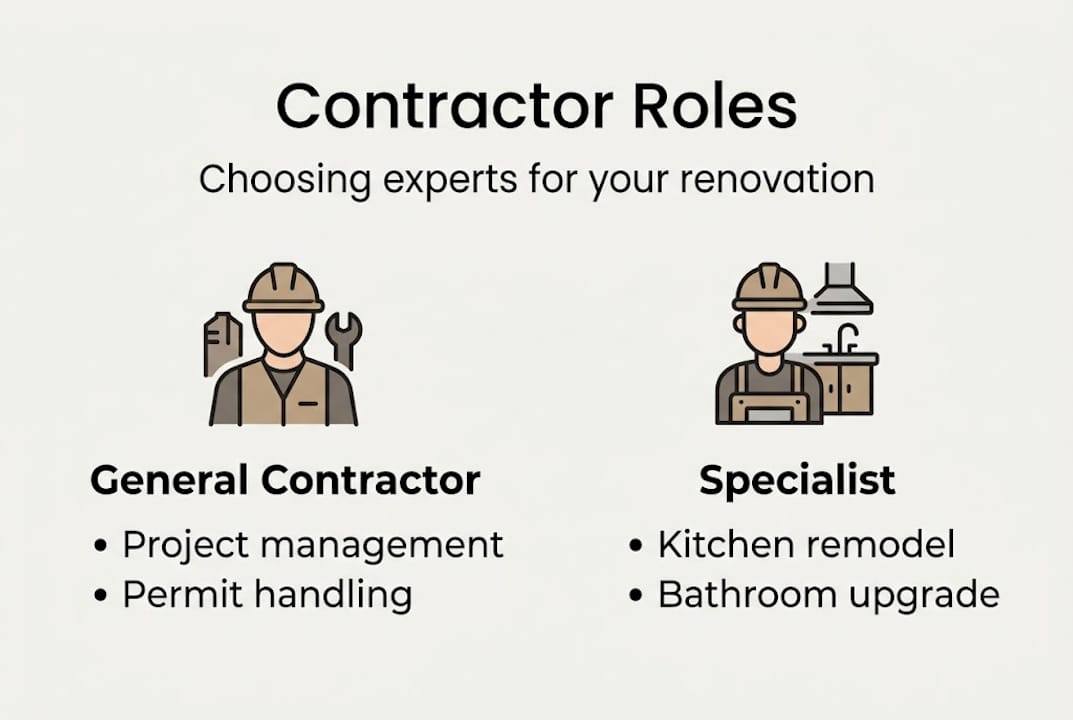
General contractors (GCs) serve as project managers. They coordinate multiple trades, pull permits, and oversee the full scope of a large renovation. If you’re adding a room to your home, finishing a basement, or tackling a full-floor renovation that involves plumbing, electrical, framing, and drywall all at once, a GC is the right choice. They hire and supervise subcontractors, keep the timeline moving, and serve as your single point of contact throughout the project.
Remodeling specialists focus on specific areas of the home. A kitchen remodeler knows cabinet installation, countertop fabrication, appliance placement, and the workflow of a functional cooking space. A bathroom specialist understands waterproofing, tile work, fixture placement, and ventilation requirements. These professionals go deeper in one area rather than wider across many.
Trade contractors are even more focused. Electricians, plumbers, HVAC technicians, and tile setters fall into this category. You typically hire them as part of a larger project, either through a GC or directly for a single repair or upgrade.
Understanding who to hire for remodeling before you start saves you from costly mismatches. Here’s a quick comparison to guide your decision:
| Project type | Best contractor fit | Why |
|---|---|---|
| Home addition or expansion | General contractor | Requires multi-trade coordination |
| Kitchen remodel | Remodeling specialist | Deep expertise in layout and function |
| Bathroom renovation | Remodeling specialist | Waterproofing, tile, and fixture knowledge |
| Basement finishing | General contractor or specialist | Framing, electrical, and moisture control |
| Single trade repair | Trade contractor | Focused skill for a specific system |
The consequences of mismatching are real. Hiring a general handyman for a full kitchen renovation often means substandard cabinet installation, improper venting, and code violations that require expensive corrections later. Conversely, hiring a kitchen specialist for a whole-home addition means they’ll be out of their depth the moment structural work or multi-trade coordination is required.
Key points to keep in mind when identifying the right contractor type:
- Large, multi-room projects almost always need a GC who can manage timelines and subcontractors
- Single-room renovations benefit most from a specialist with a proven portfolio in that specific space
- Always ask what percentage of their recent projects match your renovation type
- Verify that their license covers the scope of work you’re planning, not just general construction
Matching the contractor type to the job from the very beginning is one of the most protective steps you can take for your budget and your timeline.
What makes a contractor reliable? Key vetting steps
Knowing the right type of contractor is only half the battle. Here’s how you separate the truly reliable from the rest.
Reliability isn’t something a contractor can simply claim. You have to verify it. The wrong contractor can cost between $5,000 and $25,000 in corrections, delays, and redone work. That’s a significant financial risk that proper vetting eliminates.
Here are the steps every homeowner in Bucks County and New Castle should follow before signing anything:
-
Verify their license. Pennsylvania requires contractors to register with the Attorney General’s Office. Delaware has its own contractor licensing board. Check both the state database and your local municipality, since some townships in Bucks County have additional requirements.
-
Confirm active insurance. Ask for a certificate of insurance that includes general liability and workers’ compensation. Call the insurance company directly to confirm it’s current. An uninsured contractor working on your property is like an unlicensed driver borrowing your car. If something goes wrong, you’re exposed.
-
Collect 3 to 5 competitive bids. Getting multiple bids isn’t just about finding the lowest price. It’s about understanding fair market value for your project. When bids are spread far apart, that’s a signal to ask more questions.
-
Check references personally. Ask for three recent references from projects similar to yours. Call them. Ask specifically about communication, timeline adherence, and how problems were handled.
-
Review their portfolio. Photos are helpful, but visiting a completed project in person is even better. Ask if any past clients would allow a walkthrough.
-
Search for complaints. Check the Better Business Bureau, Google reviews, and your local Nextdoor or neighborhood Facebook groups. Local reputation in Bucks County and New Castle carries real weight.
When choosing a remodeling company, watch for these red flags that signal a contractor isn’t trustworthy:
- Demanding full payment upfront before any work begins
- Offering a bid that’s dramatically lower than all others with no explanation
- Refusing to provide proof of insurance or licensing
- Pressuring you to sign quickly or make fast decisions
- No physical business address or local presence
“The cheapest bid often becomes the most expensive project. Vetting contractors thoroughly before you commit is the single most effective way to protect your renovation investment.”
Pro Tip: When reviewing bids, ask each contractor to break down the cost by labor, materials, and overhead. This makes it much easier to compare bids accurately and spot where one estimate might be cutting corners.
For a full list of key steps to find reliable contractors and the specific questions to ask contractors before you hire, those resources will give you a solid starting framework.
Matching contractor expertise to your renovation project
Once you know how to spot a reliable contractor, match their expertise to the specific renovation you’re planning.
Every renovation has its own demands. A contractor who does exceptional work in one area may deliver average results in another. The goal is to find someone whose track record aligns closely with what you’re actually building or upgrading.
Here’s a practical breakdown of how expertise should align with common renovation types in this area:
| Renovation type | Key expertise to look for | Questions to ask |
|---|---|---|
| Kitchen remodel | Cabinetry, countertops, layout design | How many kitchens have you completed in the last year? |
| Bathroom renovation | Waterproofing, tile, fixture installation | Can I see photos of wet room tile work? |
| Home addition | Structural framing, permits, multi-trade coordination | Who are your subcontractors and how long have you worked with them? |
| Basement finishing | Moisture control, egress, insulation | How do you handle moisture issues before framing? |
| Exterior remodeling | Siding, roofing, windows, weatherproofing | What products do you use and why? |
When you’re planning a kitchen renovation, working with kitchen remodeling contractors who specialize in that space means you get someone who already knows the common pitfalls, the best layout configurations, and which materials hold up over time. The same logic applies to bathroom specialists who understand waterproofing and ventilation at a level that a generalist simply doesn’t.
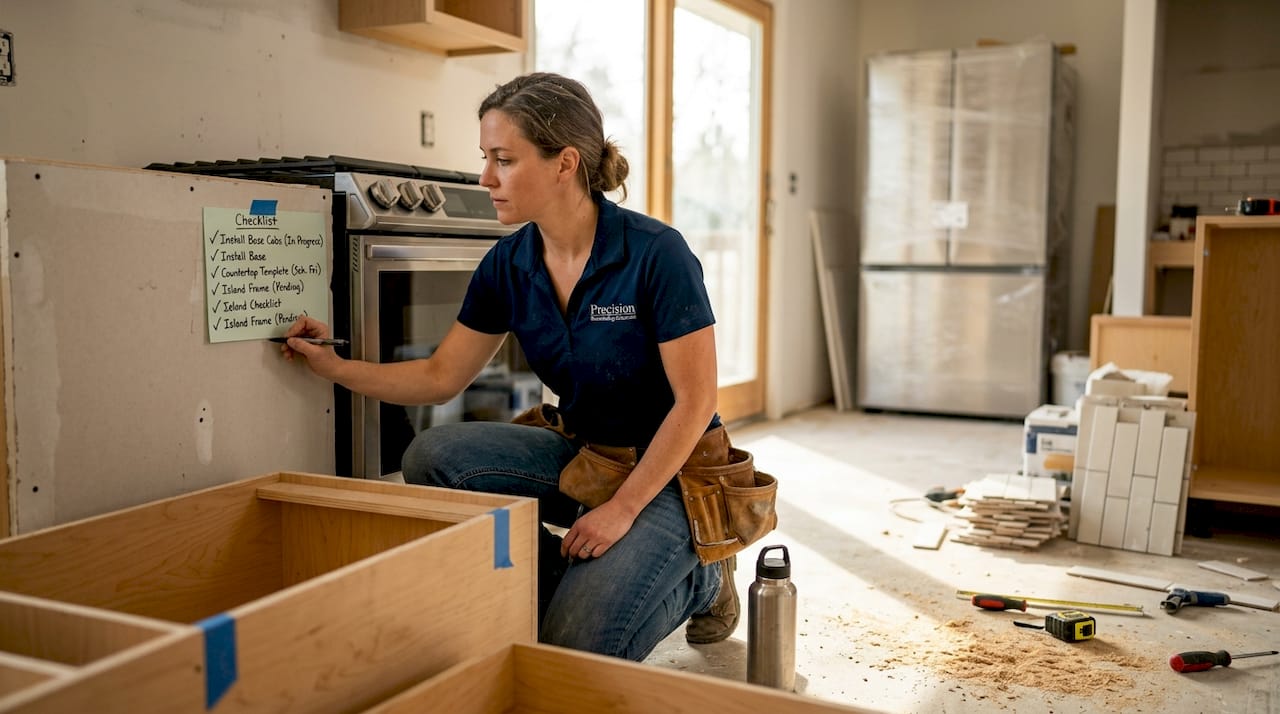
For basement projects, basement contractors who focus on below-grade spaces know how to address moisture infiltration before it becomes a mold problem. That specialized knowledge protects your investment long after the project is finished.
Here’s what to look for when assessing expertise fit:
- Years of experience specifically in your project type, not just general construction
- Recent, local project examples that match your renovation in scope and style
- Subcontractor relationships that are stable and long-term, not assembled last minute
- Familiarity with local permit requirements in your specific township or county
Pro Tip: Ask every contractor to describe a problem they encountered on a recent similar project and how they resolved it. Their answer tells you far more about their competence and communication style than any sales pitch ever will.
According to industry guidance on contractor selection, specialists consistently outperform generalists on single-room renovations because their focused experience reduces errors and speeds up execution. That efficiency translates directly into cost savings and a smoother project experience for you.
Protecting your investment: Contracts, payments, and local best practices
Even after choosing the right contractor, protecting yourself in writing is essential. Here’s how.
A handshake and a verbal agreement are not enough. Even with a trustworthy contractor, a written contract protects both parties and keeps the project on track. Skipping this step is one of the most common mistakes homeowners make, and it’s entirely avoidable.
Here’s what every renovation contract should include:
-
Detailed scope of work. Every task, material, brand, and finish should be listed in writing. Vague language like “update kitchen” leaves too much room for misunderstanding.
-
Payment schedule tied to milestones. Never pay the full amount upfront. Structure payments around completed phases. For example: 10% at signing, 30% at demolition completion, 30% at rough-in inspection, 20% at substantial completion, and 10% at final walkthrough.
-
Project timeline with specific dates. Include start date, major milestone dates, and a target completion date. Also include language about what happens if the timeline is missed.
-
Change order process. Any change to the original scope must be documented in writing with a revised cost and timeline before work proceeds. Verbal change approvals are a common source of billing disputes.
-
Lien waiver provisions. In Pennsylvania and Delaware, subcontractors can place a lien on your property if the GC fails to pay them. A lien waiver clause protects you from this scenario.
-
Warranty terms. Know exactly what is covered, for how long, and what voids the warranty.
For Bucks County homeowners, it’s worth noting that some townships require permits for work that other areas consider minor. New Castle, Delaware has its own inspection requirements that differ from Pennsylvania standards. Your contractor should know these local rules and pull the appropriate permits before work begins. If they suggest skipping permits to save money, that’s a serious red flag.
The project management guide covers how to stay organized throughout the renovation process, and the remodeling timeline resource helps you understand what to expect at each phase so you’re never caught off guard.
Pro Tip: Before signing the contract, read it with a highlighter and mark anything that feels vague or undefined. Then ask your contractor to clarify each item in writing before you finalize. A confident, reputable contractor will welcome this conversation.
The milestone payment structure is one of the most effective tools you have to keep a project moving and hold a contractor accountable. It aligns their financial incentive with your project progress.
The hidden costs of overlooking contractor roles
Let’s step back and look at what homeowners in your area have learned the hard way.
Here’s something most renovation guides won’t tell you directly: the biggest financial mistakes in home renovation rarely come from choosing expensive materials or ambitious designs. They come from choosing the wrong contractor and not having the right protections in place before work begins.
We’ve seen projects in Bucks County and New Castle where homeowners hired based on a low bid and a friendly recommendation, only to face costly contractor mistakes totaling $10,000 or more in repairs. The contractor had a license, but it didn’t cover the scope of work. The insurance had lapsed. There was no written contract.
The counterintuitive truth is that a higher bid from a thoroughly vetted contractor almost always costs less in the long run than a low bid from someone you didn’t fully check out. Local reputation matters more than a polished website. A contractor who has completed ten kitchens in your neighborhood and has neighbors who will vouch for them is worth more than a company with a national brand and a slick portfolio.
The value of local remodeling companies goes beyond familiarity. Local contractors know the inspectors, understand the permit timelines, and have relationships with local suppliers that national companies simply don’t have. That local knowledge protects your project in ways that are hard to quantify until something goes wrong and you realize your contractor already knew how to handle it.
Ready to renovate? Work with Bucks and Delaware’s trusted experts
You now have a clear picture of what separates a successful renovation from a costly one. The next step is connecting with professionals who already meet every standard covered in this article.
Precision Remodeling Solutions serves homeowners throughout Lower and Central Bucks County and New Castle, Delaware with specialized teams for every major renovation type. Whether you’re planning local kitchen remodeling, working with Bucks County bathroom remodelers to transform a dated space, or exploring finished basement services to add livable square footage, our team brings verified expertise, transparent pricing, and a proven local track record. Contact us today for a free estimate and see exactly what a properly matched, fully vetted contractor looks like in practice.
Frequently asked questions
What’s the difference between a general contractor and a renovation specialist?
General contractors manage multi-trade expansion jobs, coordinating subcontractors across multiple systems, while specialists focus on a single area like kitchens or bathrooms with deeper, more targeted expertise.
How do I avoid common contractor problems?
Always verify licenses and insurance, collect multiple bids, and use milestone payment structures instead of paying large sums upfront, which keeps the contractor accountable throughout the project.
Why should I get multiple bids for my home renovation?
Collecting 3 to 5 bids helps you understand fair market pricing, identify unusually low bids that signal risk, and compare contractor qualifications side by side before committing.
What is the typical cost impact of hiring the wrong contractor?
Choosing the wrong contractor can add $5,000 to $25,000 in correction costs and project delays on top of your original renovation budget.
Is hiring a local contractor better than a national company?
Local contractors typically have stronger knowledge of regional permit requirements, established relationships with local inspectors, and community references you can verify directly, making them easier to hold accountable if issues arise.
Recommended
- Essential roles in home renovation: Who to hire for quality remodeling – Precision Remodeling Solutions
- How to choose reliable renovation contractors: 5 key steps – Precision Remodeling Solutions
- Home renovation terms: speak your project’s language – Precision Remodeling Solutions
- The Remodeling Timeline: What to Expect from Start to Finish