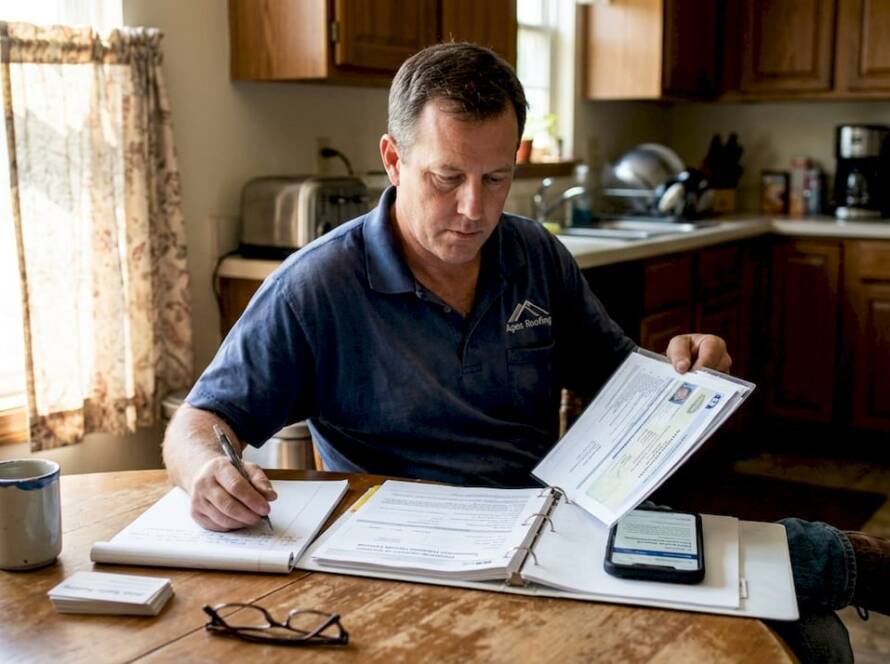
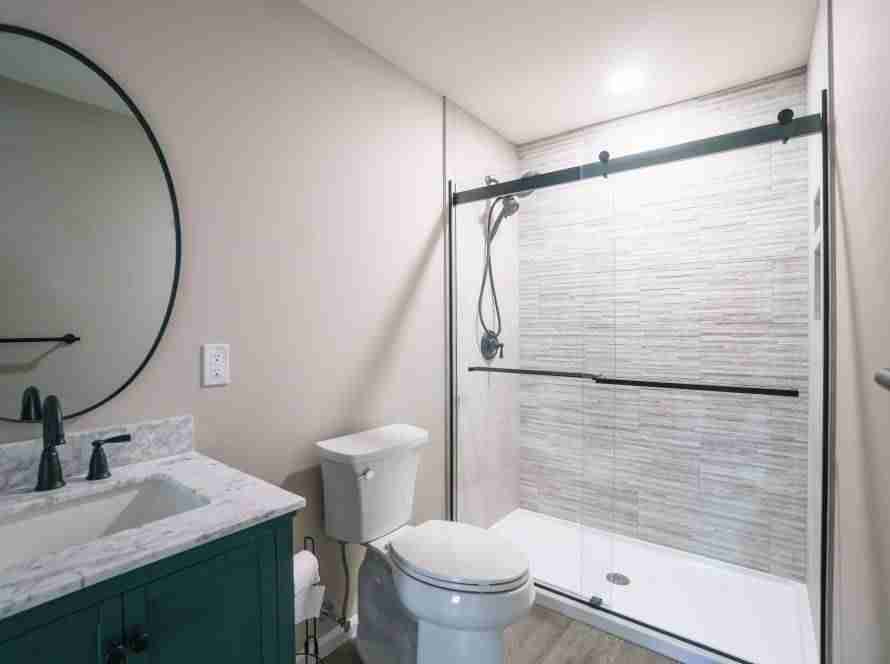
TL;DR:
- Only half of remodels finish on schedule, with most delays caused by poor planning and permit issues.
- Effective project management involves clear scope freeze, detailed bidding, proper sequencing, and closeout.
- Working with local experts and adopting proven frameworks can significantly reduce risks and delays.
Only 50% of home remodel projects finish on schedule, while 37% go over budget. That means if you’re planning a kitchen update, bathroom refresh, or whole-home renovation in Lower or Central Bucks County, or New Castle, Delaware, the odds aren’t automatically in your favor. The difference between a smooth remodel and a stressful one usually comes down to one thing: how well the project is managed. This guide walks you through a proven, step-by-step framework that covers everything from early planning to final walkthrough, so you can feel confident, stay on budget, and actually enjoy the process.
Table of Contents
- What is project management for remodels?
- Phase 1: Effective planning and scope definition
- Phase 2: Choosing the right team and securing bids
- Phases 3 & 4: Execution, task sequencing, and final closeout
- Remodel project management methods: Waterfall, agile, and tech tools
- Our perspective: The critical project management shortcut most homeowners overlook
- Ready to start your remodel? Our proven team can help
- Frequently asked questions
Key Takeaways
| Point | Details |
|---|---|
| Follow a structured workflow | Using a 4-phase project management framework can reduce the risk of delays and budget overruns. |
| Prioritize early planning | Lock in your scope, submit permits early, and budget for local requirements to avoid common pitfalls. |
| Choose the right team | Careful contractor selection and clear bids set your remodel up for success. |
| Sequence tasks for efficiency | Proper sequencing and monitoring can prevent costly mistakes and keep your timeline realistic. |
| Leverage management tools | Blending classic and modern project management methods helps adapt to any project’s needs. |
What is project management for remodels?
Now that you know why remodels so often derail, let’s look at what project management actually means in this context. At its core, project management for remodeling is the process of organizing every task, person, timeline, and dollar involved in your renovation. It’s not just scheduling contractors. It’s about having a system.
If you want to understand the full scope, home remodeling explained is a great starting point. Once you see how many moving parts are involved, the need for structure becomes obvious.
Remodel project management follows a structured 4-phase framework: Planning, Bidding, Execution, and Closeout. Each phase builds on the last, and skipping steps in any one of them is where most homeowners run into trouble.
Here’s a quick overview of the four phases:
| Phase | Key Focus | Common Pitfall |
|---|---|---|
| Planning | Goals, scope, permits, budget | Vague scope or no permit timeline |
| Bidding | Contractor selection, bid review | Choosing lowest price without vetting |
| Execution | Task sequencing, inspections | Poor sequencing causes rework |
| Closeout | Punch list, documentation | Skipping final walkthrough |
The most common reasons projects fail include:
- Scope creep (adding work mid-project without adjusting budget)
- Permit delays due to late submissions
- Poor contractor communication
- Unrealistic timelines set at the start
- No contingency budget for surprises
Pro Tip: Before you even call a contractor, write down your top three priorities for the project. This single habit will guide every decision that follows and keep you from getting pulled in too many directions.
Understanding local remodeling company values also matters here. Local firms know your municipality’s permit office, inspection timelines, and common material lead times, which can make or break your schedule.
Phase 1: Effective planning and scope definition
With the basics covered, planning becomes your foundation and here’s how to do it right. This phase is where you make the most important decisions of your entire project. Spending extra time here pays off significantly later.

Start by defining your scope clearly. A scope is simply a written list of everything the project will include, and equally important, everything it won’t. Nail this down before anything else moves forward.
Here are the key tasks to complete during planning:
- Write down must-haves versus nice-to-haves
- Research permit requirements for your municipality in PA or DE
- Set a realistic timeline with room for inspection delays
- Identify long-lead materials (custom cabinets, specialty tile) early
- Submit permits before your start date, not after
Early scope freeze and permit submission, plus 20-30% budget buffers, are key to local remodel success. A scope freeze means locking your project requirements before construction begins. Changes after that point cost significantly more time and money.
For budgeting, a proven structure helps: allocate 40-60% toward systems like plumbing, electrical, and HVAC; 20-30% toward functional spaces like kitchens and bathrooms; and 10-30% as contingency for unexpected costs.
“The most expensive decision in any remodel is the one you make in a hurry.” Build your plan carefully and revisit it often.
If you’re unsure what your renovation should cost, reviewing remodeling cost estimates will give you solid benchmarks to work from before you meet with any contractor.
Pro Tip: In Bucks County and New Castle, Delaware, permit review times can range from two to six weeks depending on the project type and season. Submit early and follow up regularly to avoid holding up your start date.
Phase 2: Choosing the right team and securing bids
Once your planning is solid, assembling the right team ensures your vision will be realized. Bidding impacts cost and timelines more than most homeowners realize, making contractor selection one of the highest-stakes decisions in any remodel.
Here’s a step-by-step approach to evaluating bids and selecting your team:
- Collect at least three bids for comparison
- Review each bid line by line, not just the total
- Verify licenses and insurance for every contractor
- Ask for references from similar local projects
- Confirm their availability aligns with your timeline
Knowing what questions to ask before hiring will help you spot problems early. Look for red flags like vague scope descriptions, no written contract, or pressure to pay a large deposit upfront.
Here’s a comparison of the two main team structures:
| Approach | Pros | Cons |
|---|---|---|
| Design-Build | Single point of contact, faster coordination | Less flexibility to shop individual trades |
| Traditional (separate contractors) | More control over each trade | More coordination burden on you |
For most homeowners managing a remodel for the first time, a design-build or single-source contractor reduces risk. You have one team accountable for everything.
Use these criteria when choosing reliable contractors:
- Clear, itemized written proposals
- Verifiable references and completed project photos
- Licensing and liability insurance on file
- Communication style that matches your expectations
If you want a deeper look at the full selection process, choosing the right remodeling company breaks down each step with practical advice.
Phases 3 & 4: Execution, task sequencing, and final closeout
With your team lined up, it’s time to tackle the work itself and here’s what happens next. Execution is where plans become walls, floors, and finished rooms. But this phase can also be where things go wrong if the work isn’t sequenced properly.
Proper task sequencing prevents 35% of cost overruns by keeping the right trades working in the right order. Here’s the standard sequence most professionals follow:
- Demolition and site prep
- Structural work and framing changes
- Rough plumbing, electrical, and HVAC
- Inspections and approvals
- Insulation and drywall
- Painting and trim
- Cabinetry and fixtures
- Flooring last to protect from damage
“Flooring always goes in last. It sounds obvious until you see a brand-new hardwood floor ruined by a plumber who needed access two days after installation.”
Here are typical timelines to set your expectations:
| Project Type | Typical Timeline | Key Variables |
|---|---|---|
| Bathroom remodel | 2-4 weeks | Tile work, fixture lead times |
| Kitchen remodel | 6-12 weeks | Cabinetry, permit inspections |
| Whole-home renovation | 6-12 months | Scope size, permit complexity |
For closeout, schedule a formal final walkthrough with your contractor. Create a punch list, which is a written record of any unfinished or deficient items, and don’t release final payment until all items are resolved.
Pro Tip: During execution, do a brief weekly check-in with your project manager or lead contractor. A 15-minute call each week catches small issues before they become expensive problems. Refer to remodel timeline details for a full breakdown of what to expect at each stage.
Remodel project management methods: Waterfall, agile, and tech tools
As you track progress, which management style and what tools should you rely on? Two major frameworks shape how renovation projects get managed: Waterfall and Agile. Understanding the difference helps you set expectations and stay in control.
| Method | Best For | How It Works |
|---|---|---|
| Waterfall | Fixed, linear projects | Sequential phases, no overlap |
| Agile/Scrum | Complex or evolving projects | Short sprints, frequent check-ins |
The Waterfall vs. Agile comparison for remodeling reveals that 85% of project overruns stem from schedule issues, not budget ones. That’s a critical insight. Most overruns aren’t caused by materials costing more; they’re caused by time being mismanaged.
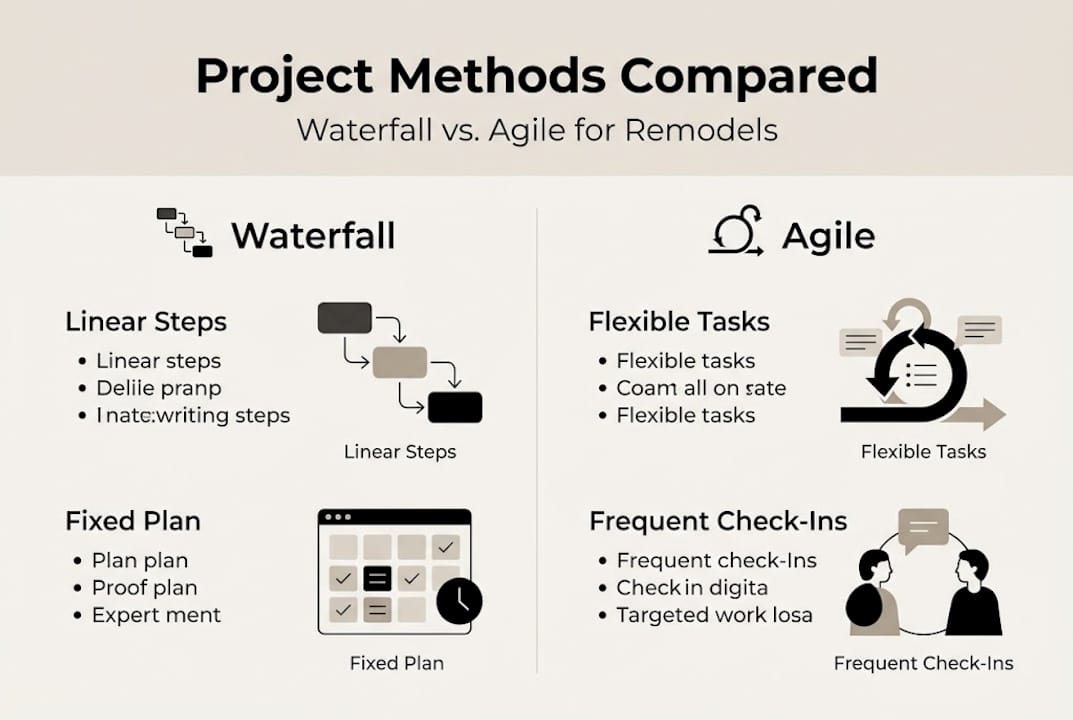
Most residential remodels in Bucks County and New Castle, Delaware use a Waterfall approach since the work has a fixed scope. But adding agile-style weekly check-ins and short feedback loops improves outcomes, especially on larger projects.
Here are tools that help homeowners stay organized:
- Spreadsheet trackers for budget vs. actuals
- Shared photo apps (like Google Photos or Houzz) to document progress
- Project scheduling apps to track milestones
- AI-based estimating tools to cross-check contractor bids
For projects that tie into broader home goals like energy savings, exploring sustainable remodeling methods can also reveal smarter sequencing options that reduce both costs and environmental impact.
The bottom line: pick the method that matches your project’s complexity, and use simple tools consistently rather than complex ones inconsistently.
Our perspective: The critical project management shortcut most homeowners overlook
All of these methods are important, but here’s the lesson we see most seasoned pros agree on. Nearly every delayed or over-budget remodel we encounter traces back to the same root cause: the homeowner skipped the scope freeze or submitted permits late.
This isn’t a minor procedural step. In Bucks County and New Castle municipalities, permit reviews can take weeks. If you break ground before approval, you may face stop-work orders that cost far more than the permit itself. We see this pattern repeat itself year after year.
The real shortcut is spending 10 extra hours in the planning phase. That investment prevents what can easily become 10 extra weeks on your timeline. Working with a team that has local remodeling expertise means they already know the permit office, the inspectors, and the local timelines. That knowledge alone can shave weeks off your project before a single wall comes down.
A design-build or full-service project management approach beats piecemeal coordination for most homeowners. One point of contact, one accountable team, and a process that’s been proven locally.
Ready to start your remodel? Our proven team can help
If you’re ready to skip the common risks and keep your project on track, working with experts who offer full project management makes all the difference. At Precision Remodeling Solutions, we bring structure, local knowledge, and hands-on guidance to every project we take on.
Whether you’re planning a kitchen remodel, a bathroom renovation, a home addition, or a full whole-home upgrade, we handle the coordination, permitting, and sequencing so you don’t have to. Our team serves Lower and Central Bucks County and New Castle, Delaware, and we offer free estimates to help you plan with confidence. Visit Precision Remodeling Solutions to start a conversation and get your project moving in the right direction.
Frequently asked questions
What are the most common reasons remodels go over budget?
The leading causes are poor task sequencing, delayed permits, and underestimating contingency needs. In fact, 35% of renovations go over budget due to sequencing errors alone.
How much time should I add to my remodel project timeline for safety?
Plan to add 20-30% to any contractor estimate to account for unexpected delays, inspection holds, or material lead times.
What is a scope freeze and why is it important?
A scope freeze locks in your project requirements before construction starts. Prioritizing early scope freeze reduces costly mid-project changes that inflate both your budget and your timeline.
How do I pick between waterfall and agile project management for my remodel?
Choose waterfall for fixed, predictable projects like a standard kitchen remodel. Agile methods, as outlined in the Waterfall vs. Scrum analysis, work best when your project scope is expected to shift.
How much of my remodel budget should be set aside for contingency?
Set aside 10-30% of your budget as contingency. The higher end applies to older homes or projects involving structural, plumbing, or electrical changes.