TL;DR:
- Verify licensing, insurance, and bonding to reduce legal and financial risks when hiring roofers.
- Check for local experience, manufacturer certifications, and a strong reputation to ensure quality work.
- During installation, actively monitor progress and review final details before making full payment.
Your roof is one of the most important and expensive parts of your home, and choosing the wrong contractor to work on it can cost you far more than you bargained for. Homeowners in Lower and Central Bucks County and New Castle, Delaware face real risks when hiring roofing crews without doing proper research. Shoddy workmanship, missing warranties, and fly-by-night contractors can leave you with leaks, voided insurance claims, and a repair bill that rivals the original project cost. This guide walks you through a clear, step-by-step process so you can hire with confidence and protect your home, your wallet, and your peace of mind.
Table of Contents
- Understand licensing, insurance, and local requirements
- Vet experience, credentials, and local reputation
- Comparing estimates and understanding contracts
- Monitor the installation and ensure quality work
- Choosing a roofer: what most guides don’t tell you
- Upgrade your home with trusted pros
- Frequently asked questions
Key Takeaways
| Point | Details |
|---|---|
| Verify credentials | Always demand proper licensing, insurance, and bonding before signing any contract. |
| Check local track record | Choose contractors with strong local reviews, verifiable certifications, and established physical addresses in your county. |
| Understand your contract | Insist on clear, detailed contracts covering every phase—never accept vague terms or large up-front payments. |
| Monitor installation daily | Stay involved by inspecting daily progress and refusing final payment until all work passes your quality checklist. |
| Mid-range bids win | Best value typically comes from qualified, reputable roofers with fair, not lowest, pricing. |
Understand licensing, insurance, and local requirements
With these risks in mind, let’s start by confirming your contractor meets every legal requirement. This is the foundation of a safe hire, and skipping it is one of the most common mistakes homeowners make.
Think of hiring an uninsured roofer the same way you’d think about riding with an unlicensed driver. If something goes wrong, you’re the one left holding the consequences. Before you let anyone climb on your roof, you need to understand three distinct protections:
- License: Confirms the contractor has met state requirements to perform roofing work legally.
- Insurance: Covers liability for property damage and workers’ compensation for injuries on your property.
- Bond: Provides financial protection if the contractor fails to complete the job or causes damage.
In Pennsylvania, PA contractor licensing guidelines make clear that you should verify licensing, insurance, and bonding, and always request certificates of insurance. PA requires home improvement contractor registration, which you can look up through the state’s online database. Delaware has similar requirements, so always confirm local compliance before signing anything.
When you request a certificate of insurance, check two things: the coverage amount and the expiration date. An expired policy is worthless. Liability coverage should be at least $1 million, and workers’ comp is non-negotiable. If a crew member gets hurt on your property and there’s no workers’ comp, you could face a lawsuit.
Don’t hire uninsured or unregistered crews. If a contractor can’t hand you a current certificate of insurance on the spot, walk away. The financial and legal risk falls entirely on you.
You can also explore roofing contractor services from established local companies who keep all credentials current and on file.
Pro Tip: Always cross-check the contractor’s registration number on your state’s official website before the first meeting. It takes two minutes and can save you thousands.
Vet experience, credentials, and local reputation
Once you’ve confirmed basic credibility, next is making sure your contractor is trusted locally and has proven expertise. A license tells you they’re legal. A strong local reputation tells you they’re good.
Local experience matters more than most homeowners realize. Bucks County and New Castle, Delaware deal with high winds, humidity, and freeze-thaw cycles that put real stress on roofing systems. A contractor who knows local climate demands will specify impact-resistant shingles and proper underlayment suited to the region. Someone from out of state may not.
Watch for these red flags:
- Out-of-state license plates on work trucks
- No physical local address or office
- Unsolicited door-knocking right after a storm
- Pressure to sign same-day with a “limited-time” discount
- Vague answers about subcontractors or material sourcing
These are classic signs of storm chasers, contractors who follow severe weather events and disappear once payment clears. Reading about roofing scams to avoid can help you spot these tactics before they cost you.
Manufacturer certifications are another strong signal. A GAF Master Elite designation, for example, is earned by fewer than 2% of roofing contractors nationwide. It requires ongoing training, proven track record, and customer satisfaction standards. In New Castle, Delaware, contractors like Premier Home Renovations carry GAF Master Elite status, and Iconic Roofing reviews show a 4.9 out of 5 rating across 68 verified GuildQuality reviews, reflecting the kind of local trust that matters.
| Credential | What it signals | How to verify |
|---|---|---|
| State license | Legal compliance | State database lookup |
| GAF Master Elite | Top-tier manufacturer training | GAF website |
| GuildQuality rating | Verified customer satisfaction | GuildQuality.com |
| Google reviews (4.8+) | Broad public trust | Google Business Profile |
| BBB accreditation | Complaint history | BBB.org |
If you notice signs of roof aging like curling shingles or granule loss, act quickly but don’t let urgency push you past these vetting steps.
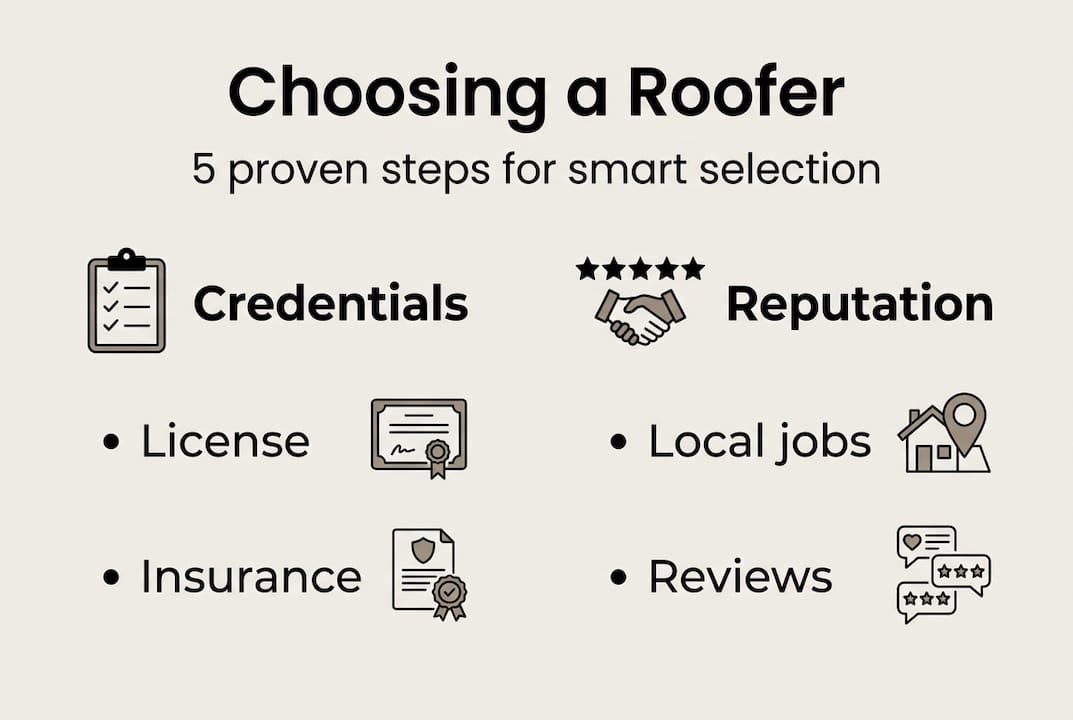
Pro Tip: Ask your top two or three candidates for addresses of recent local jobs. Drive by and look at the finished work. Better yet, call those homeowners directly.
Comparing estimates and understanding contracts
Now that you have a shortlist of reputable roofers, let’s get into the numbers and how to make sure your agreement protects you.
One of the biggest surprises for homeowners is how much bids can vary. Roofing bids vary 2 to 3 times, with ranges like $10,000 to $28,000 for similar projects, and there’s no automatic link between price and quality. The lowest bid often signals cut corners on materials or labor. The highest bid doesn’t guarantee the best result. Mid-range pricing paired with strong credentials is usually your best bet.
Here’s what every solid estimate should include:
- Itemized list of materials with brand names and product grades
- Labor costs broken out separately from materials
- Timeline with start and estimated completion dates
- Payment schedule with no more than 10% upfront
- Cleanup and debris removal plan
- Warranty terms for both materials and workmanship
Understanding what to expect in estimates helps you spot vague or incomplete proposals before they become problems. A detailed contract specifying materials, payment schedule, cleanup, safety protocols, and warranties covering both material and workmanship for five or more years is the standard you should hold every contractor to.
| Bid element | Acceptable | Red flag |
|---|---|---|
| Upfront payment | Up to 10% | More than 30% |
| Warranty | Material + 5 yr labor | Material only |
| Contract detail | Itemized line items | Lump sum only |
| Timeline | Specific dates | “A few weeks” |
Never sign a blank or partially filled contract. Never pay in full before work begins. Use comparing roofing bids as a reference when reviewing multiple proposals side by side.
Pro Tip: Always confirm in writing that the warranty covers both materials and labor. A material-only warranty leaves you paying out of pocket if installation errors cause a leak.
Monitor the installation and ensure quality work
With paperwork in order, your role isn’t over. Stay involved during installation for the best results.
Many homeowners assume their job is done once the contract is signed. It isn’t. Active oversight during installation is one of the best things you can do to protect your investment. You don’t need to be on the roof, but you should check in daily and know what to look for.
Here’s a simple daily checklist:
- Is the old roofing material being fully removed, or is it being layered over?
- Is the underlayment being installed before shingles go on?
- Are flashing details around chimneys, vents, and valleys being done carefully?
- Are fasteners being placed correctly, not overdriven or underdriven?
- Is ventilation being maintained or improved, not blocked?
Sloppy work in any of these areas leads to premature failure. Proper ventilation, flashing, and underlayment are the difference between a roof that lasts and one that leaks within a few years. Follow a roofing safety checklist to know what professional standards look like.
“A quality-installed roof in Pennsylvania can last 20 to 30 years. But shortcuts during installation, like skipping proper underlayment or using too few fasteners, can cut that lifespan dramatically.”
Before final payment, walk the property with your contractor. Review the punch list together. Check that all debris has been removed, gutters are clear, and no nails are left in the yard. Take photos of the finished work. Withhold final payment until every item on the punch list is resolved.
You can also use roof maintenance tips to build a long-term care routine once your new roof is installed.
Choosing a roofer: what most guides don’t tell you
Here’s something worth saying plainly: most homeowners focus almost entirely on price, and that’s exactly where they go wrong. Price is the least reliable indicator of quality in roofing. The wide bid range you’ll see, sometimes $10,000 to $28,000 for the same job, reflects differences in business practices, not just materials.
The contractors who spend heavily on advertising often pass that cost to you. The ones with the most local jobs, steady word-of-mouth referrals, and deep community ties tend to do better work because their reputation depends on every single project.
Most homeowners also skip the step of visiting a contractor’s recent job sites or calling references. That’s the single most revealing thing you can do. A roofer who hesitates to provide references is telling you something important.
Finally, treat the contract process as a communication test. A contractor who is vague, pushes back on itemization, or rushes you to sign is showing you how they’ll handle problems mid-project. The best roofing pros welcome detailed contracts because they’re confident in their work. Use every step of this process not just to evaluate the bid, but to evaluate the person.
Upgrade your home with trusted pros
If you’re ready to put these insights to work and want a hassle-free project, connect with our trusted local team. At Precision Remodeling Solutions, we bring the credentials, transparency, and local knowledge that Bucks County and New Castle homeowners deserve.
Our roofing services cover everything from full replacements to targeted repairs, with clear contracts and warranties you can count on. And if you’re thinking beyond the roof, we also handle finished basement upgrades and kitchen remodeling to help you get the most out of every corner of your home. Reach out today for a free estimate and see why local homeowners trust us to get the job done right.
Frequently asked questions
What documents should a roofing contractor provide before work starts?
A roofing contractor should provide a current license, certificates of insurance covering liability and workers’ comp, and a detailed contract outlining all work, materials, and warranties.
How can I tell if a roofer is a storm chaser?
Look for local ties and registration such as a physical local address and state registration. Storm chasers often show up unsolicited after storms, use out-of-state plates, and have no verifiable local history.
Is a cheaper roofing bid always a better deal?
No. Bids vary 2 to 3 times for similar projects, and the lowest price often means skipped steps or inferior materials. Mid-range pricing with strong credentials consistently offers the best long-term value.
What quality checks should I do during my roof replacement?
Verify daily that ventilation, flashing, and underlayment are being installed correctly, and hold final payment until your punch list is fully resolved.
How long should a new roof last in Pennsylvania or Delaware?
With a quality installation, PA roofs last 20 to 30 years. Shortcuts during installation can reduce that lifespan significantly, which is why active oversight matters.
Recommended
- How to choose reliable renovation contractors: 5 key steps – Precision Remodeling Solutions
- Practical Tips for Choosing the Right Roofing Contractor – Precision Remodeling Solutions
- 5 Key Safety Practices Good Roofers Observe – Precision Remodeling Solutions
- How To Choose the Right Remodeling Company