TL;DR:
- Prioritize air sealing and insulation as the foundation for energy savings and rebate eligibility.
- Complete envelope upgrades before HVAC to ensure proper sizing and maximize long-term efficiency.
- Local rebate programs and proper sequencing reduce costs and enhance performance in energy-efficient remodeling.
Balancing upfront remodeling costs against long-term savings is one of the most stressful decisions a homeowner can face. You want real results, not just a prettier house. In Lower and Central Bucks County and New Castle, Delaware, the good news is that local rebate programs, combined with smart upgrade sequencing, can dramatically cut your out-of-pocket investment while delivering measurable comfort improvements. This article walks you through practical, proven examples of energy efficient remodeling, from air sealing to solar integration, so you can make confident, well-informed choices for your home.
Table of Contents
- How to choose energy efficient remodeling upgrades
- Air sealing and insulation: The foundation for savings
- Windows and doors: High-performance choices
- HVAC and electrification: Heat pumps and water heating
- Lighting, renewables, and finishing touches
- Remodeling comparison table: Which upgrades pay off?
- Why local expertise and sequencing matter more than flashy upgrades
- Next steps with local remodeling pros
- Frequently asked questions
Key Takeaways
| Point | Details |
|---|---|
| Audit before upgrades | An energy audit identifies the most cost-effective improvement opportunities for your home. |
| Seal and insulate first | Air sealing and insulation upgrades deliver substantial savings and enable efficient HVAC sizing. |
| Maximize rebate value | Local programs cover up to half the cost for many energy-efficient upgrades in PA and DE. |
| Sequence for better ROI | Upgrading envelope elements before electrification or HVAC avoids wasted spending and boosts results. |
| Choose smart finishing touches | LED lighting, controls, and solar integration add comfort and net-zero potential with minimal effort. |
How to choose energy efficient remodeling upgrades
Now that the benefits are clear, let’s start with the framework for making effective choices. The single biggest mistake homeowners make is jumping straight to the most visible upgrades, like new windows or a shiny heat pump, before addressing the hidden problems that quietly drain energy every day.
The right starting point is always a professional home energy assessment. A certified auditor uses tools like blower door tests and thermal cameras to pinpoint exactly where your home is losing conditioned air. Audit-first sequencing is recommended for maximum returns because it tells you where every dollar will work hardest. Without this step, you’re essentially guessing.
Once you have your audit results, prioritize upgrades in this order:
- Envelope first: Air sealing and insulation are always the foundation. Fix the shell before anything else.
- Mechanical systems second: Right-size your HVAC only after the envelope is tight, so you don’t overbuy capacity you don’t need.
- Renewables last: Solar panels and battery storage make the most sense on a home that already uses less energy.
- Leverage local programs: Efficiency Smart (serving PECO customers in Bucks County) and Energize DE (for New Castle area homeowners) both offer rebates that can offset hundreds to thousands of dollars in upgrade costs.
- Match upgrades to your climate: The mixed-humid climate of PA and DE calls for specific specs, including R-30 or better wall insulation and heat pumps sized appropriately for cold winter temperatures.
Understanding sustainable remodeling benefits can also help you see how these upgrades work together as a system rather than a collection of separate projects.
Pro Tip: Never replace your HVAC system before completing air sealing and insulation. A tighter envelope means your new system can be smaller and less expensive, saving you money twice.
If you’re new to the process, reviewing home remodeling explained gives you a solid foundation before you start collecting contractor quotes.
Air sealing and insulation: The foundation for savings
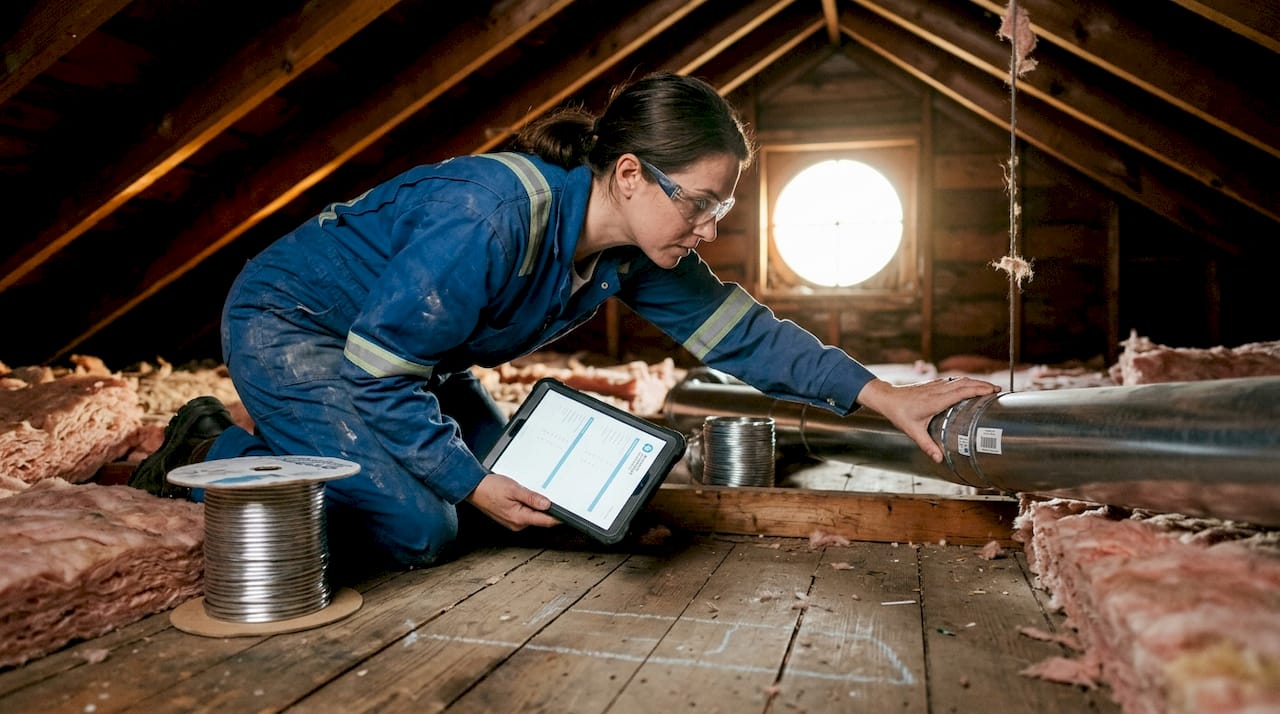
With criteria set, the foundation step is always the “envelope,” meaning air sealing and insulation. Think of your home’s shell like a winter coat. A coat full of holes won’t keep you warm no matter how good the lining is. Air sealing patches those holes first.
Here’s a practical sequence for tackling this work:
- Schedule a blower door test to identify the exact locations of air leaks in your home’s shell.
- Seal attic bypasses around light fixtures, plumbing penetrations, and framing gaps using spray foam or caulk.
- Weatherstrip all exterior doors and apply fresh caulking around window frames and sill plates.
- Upgrade attic insulation to R-49 and walls to R-30 or better, which matches the recommendations for the mixed-humid climate zone covering Bucks County and New Castle.
- Install mechanical ventilation (an HRV or ERV unit) to maintain healthy indoor air quality once the home is tightly sealed.
Air sealing can yield a 20 to 40% improvement in energy performance, and Delaware homeowners may qualify for $900 to $2,000 in rebates through Energize DE. That’s a meaningful chunk of your project cost covered before you even start.
Savings spotlight: Deep envelope retrofits, meaning full air sealing plus insulation upgrades, can deliver up to 50% reductions in total utility bills for older homes with significant leakage.
One important caution: don’t over-insulate without planning for ventilation. Modern, tightly sealed homes need mechanical fresh air systems to prevent moisture buildup and maintain healthy indoor air quality. Envelope-first sequencing also preserves your home’s structural integrity and can cut embodied carbon by up to 75% compared to full demolition and rebuild approaches.
For more detail on how these local sustainable methods apply to homes in this region, it’s worth reviewing the specific products and techniques contractors use here.
Windows and doors: High-performance choices
Once the home’s envelope is tight, windows and doors become the next big opportunity. They’re the most visible upgrade, and they do double duty: cutting energy loss while improving curb appeal and comfort near exterior walls.
ENERGY STAR certified windows are the baseline. But within that category, there are meaningful differences worth understanding before you buy.
| Window type | U-factor range | Best use case | Approximate cost per window | Key benefit |
|---|---|---|---|---|
| Double-pane Low-E | 0.25 to 0.30 | Mixed-humid climates (PA/DE) | $300 to $700 | Best cost-to-savings ratio locally |
| Triple-pane | 0.15 to 0.20 | Very cold climates | $600 to $1,200 | Superior insulation, higher upfront cost |
| Single-pane (existing) | 0.90 to 1.10 | None recommended | N/A | Baseline for comparison |
High-performance windows offer 7 to 15% energy savings, translating to roughly $71 to $501 per year depending on your home’s size and current window condition. Rebates are available through both Efficiency Smart and Energize DE programs.
Key features to look for when comparing window options:
- Low-E coating: Reflects infrared heat back into the room in winter and blocks solar heat gain in summer.
- Gas fill (argon or krypton): Improves insulating performance between panes without adding visible thickness.
- Warm-edge spacers: Reduce condensation at the glass edge, which is a common complaint in older double-pane units.
- ENERGY STAR Most Efficient designation: The top tier of certified products, worth seeking out if your budget allows.
Triple-pane is best for cold climates, but double-pane Low-E is often the more cost-effective choice for the Bucks County and New Castle area, where winters are cold but not extreme. Spending extra on triple-pane glass in a mixed-humid climate rarely pays back within a reasonable timeframe.
Pro Tip: When budgeting for window and door upgrades, apply any remaining rebate dollars from your air sealing project to cover a portion of window costs. Stacking incentives across projects is one of the fastest ways to improve your overall return on investment.
HVAC and electrification: Heat pumps and water heating
With the envelope and openings resolved, efficient electrification is the final major step. This is where many homeowners feel most uncertain, because HVAC choices involve the largest upfront costs and the most technical decisions.
Here’s a clear sequence to follow after completing envelope upgrades:
- Get a Manual J load calculation from your contractor. This determines the correct size for your new HVAC system based on your now-tighter home, not the old leaky version.
- Choose a cold-climate heat pump rated at SEER2 16 or higher and HSPF2 7.8 or better. These ratings reflect real-world efficiency under updated testing standards.
- Replace your water heater with a heat pump model. These units use 60 to 70% less electricity than standard electric resistance heaters and typically pay back within 3 to 5 years.
- Consider a mini-split system for additions or rooms with comfort problems. They avoid duct losses entirely and offer room-by-room control.
- Evaluate geothermal only if your lot allows ground loops and your budget supports the higher installation cost. It’s a superior system for the coldest zones but rarely the best first choice here.
Right-sized heat pumps with SEER2 16 or higher ratings qualify for $800 to $1,200 in rebates and deliver greater year-round efficiency than conventional gas furnaces for most PA and DE homes.
“Deep retrofits preserve structure, cut costs and carbon.”
Heat pump water heaters and full electrification are central to achieving a HERS score below 85, which is the benchmark for a high-performance home under the Home Energy Rating System. Reaching that score unlocks additional incentive tiers in the Energize DE program.
Lighting, renewables, and finishing touches
Finally, add efficient lighting and renewable systems to complete your energy-saving remodel. These upgrades are often the most satisfying because the results are immediate and visible every day.
Start with lighting. Switching from incandescent or older CFL fixtures to high-quality LED fixtures cuts lighting energy use by 75% or more. LED lighting and controls are among the simplest and most cost-effective upgrades you can make, with payback periods often under two years.
Here’s a breakdown of upgrades from simple to advanced:
- Simple upgrades: Replace all bulbs with LED, install occupancy sensors in bathrooms and utility rooms, add a smart thermostat (Ecobee or Nest) for automatic scheduling.
- Mid-level upgrades: Install whole-home energy monitoring, upgrade to ENERGY STAR appliances during routine replacements, add solar-ready electrical panels.
- Advanced upgrades: Install rooftop solar PV, add battery storage for backup power, connect to net metering programs through PECO or Delmarva Power.
Solar PV integration enables net-zero homes, and a 2,000 sq ft home in PA or DE can see $2,300 to $2,700 in yearly savings after a complete net-zero retrofit. That’s a compelling number when you factor in 25-year solar panel warranties and the federal Investment Tax Credit.
For kitchens, energy-saving kitchen lighting upgrades pair naturally with a full kitchen remodel, letting you address fixtures, appliances, and ventilation in one coordinated project. On the exterior, exterior remodeling tips can guide decisions about siding, roofing, and shading features that reduce solar heat gain in summer.
Pro Tip: Use leftover rebate dollars from your envelope and HVAC projects to fund LED fixtures and smart controls. The combination of lower consumption and smarter scheduling consistently delivers the best return on remaining budget.
Remodeling comparison table: Which upgrades pay off?
Now let’s compare all the major upgrades side-by-side for quick reference. This table reflects typical costs and savings for homes in Lower and Central Bucks County and New Castle, Delaware.
| Upgrade type | Starting cost | Potential rebates | Est. annual savings | Key benefit |
|---|---|---|---|---|
| Air sealing | $500 to $1,500 | $900 to $2,000 (Energize DE) | $200 to $600 | Fastest payback, foundation for all other upgrades |
| Attic insulation (R-49) | $1,500 to $4,000 | $500 to $1,500 | $300 to $700 | Reduces heating and cooling load significantly |
| Windows (double-pane Low-E) | $300 to $700 per window | Up to $600 (Efficiency Smart) | $71 to $501 | Comfort near exterior walls, noise reduction |
| Heat pump HVAC | $8,000 to $15,000 | $800 to $1,200 | $500 to $1,200 | Year-round efficiency, qualifies for federal tax credits |
| Heat pump water heater | $1,000 to $1,800 | $300 to $500 | $300 to $500 | 60 to 70% less electricity than standard electric |
| LED lighting and controls | $200 to $1,000 | $50 to $200 | $100 to $300 | Immediate savings, minimal disruption |
| Solar PV (full system) | $18,000 to $35,000 | Federal ITC (30%) + state credits | $1,200 to $2,700 | Net-zero potential, long-term asset value |
Upgrades range from $900 rebates for air sealing to full net-zero retrofit costs, with the best-performing projects delivering up to $2,700 in annual savings. The table makes one thing clear: the highest-cost upgrades are not always the fastest to pay back. Air sealing and insulation consistently win on return speed.
Why local expertise and sequencing matter more than flashy upgrades
With options compared, let’s look at what most homeowners and even some contractors often miss. The remodeling industry tends to market the most visible upgrades: solar panels, new windows, high-tech heat pumps. These are genuinely valuable. But they’re only as effective as the foundation beneath them.
We’ve seen homeowners invest $15,000 in a new HVAC system, only to find their energy bills barely changed because the attic was still leaking conditioned air into the sky. The system ran constantly trying to compensate for losses that a $2,000 air sealing job would have fixed. That’s a painful and avoidable outcome.
Local climate and rebate programs genuinely shift the priority order here. In Bucks County and New Castle, the mixed-humid climate means you’re fighting both cold winters and humid summers. That combination rewards envelope upgrades more than almost any other investment, because a tight, well-insulated home handles both extremes better than a leaky home with a powerful HVAC system.
Sequencing is the skill that separates a good remodel from a great one. An airtight envelope right-sizes everything that follows. It determines what HVAC capacity you actually need, how many solar panels will cover your load, and whether your windows need to be triple-pane or if double-pane Low-E will do the job. Skipping to the exciting upgrades first is like buying expensive running shoes before treating a knee injury.
Good remodel project management is what keeps this sequence on track. A contractor who understands building science will push back if you want to jump ahead. That kind of professional guidance is worth more than any single product upgrade.
Next steps with local remodeling pros
Ready to start your own energy-efficient project? Here’s how local experts can help.
At Precision Remodeling Solutions, we work with homeowners across Lower and Central Bucks County and New Castle, Delaware, to plan and execute upgrades in the right order, maximizing both rebate capture and long-term savings. Whether you’re starting with air sealing and insulation or ready to tackle a full kitchen or exterior renovation, our team brings the building science knowledge and project management experience to keep your remodel on track and on budget.
Explore our kitchen remodeling services to see how energy-efficient lighting and appliance upgrades fit naturally into a full kitchen renovation. Our window and door replacement team can help you select the right products for your climate zone and connect you with available rebates. For exterior projects, our exterior remodeling services cover siding, roofing, and more. Contact us today for a free estimate and let’s build your energy savings plan together.
Frequently asked questions
What is the most cost-effective energy efficient upgrade for Bucks County or New Castle homes?
Air sealing and attic insulation usually yield the fastest payback and qualify for substantial rebates, especially in mixed-humid climates. Air sealing yields a 20 to 40% improvement in energy performance, making it the strongest starting point for most homes.
How much can I save annually after a net-zero energy retrofit?
A typical 2,000 sq ft home in PA or DE can save $2,300 to $2,700 yearly after completing a full net-zero upgrade package including solar, insulation, and efficient HVAC.
Are there local rebates or incentives for energy efficient remodeling?
Yes, Efficiency Smart and Energize DE programs cover more than 50% of costs for many eligible upgrades, including air sealing, insulation, windows, and heat pump systems.
Is it necessary to upgrade ventilation when improving insulation?
Yes, tightly insulated homes require HRV/ERV ventilation to maintain healthy indoor air quality, since natural air infiltration is no longer sufficient once the home is sealed.
How do I avoid overspending on HVAC when remodeling?
Always improve the home’s envelope before HVAC replacement to ensure the system is correctly sized for your actual heating and cooling load, which prevents buying more capacity than you need.
Recommended
- Sustainable remodeling: Benefits, methods, and local solutions – Precision Remodeling Solutions
- Top Remodeling Trends That Add Value to Your Home
- The Smart Home Advantage: Upgrades That Increase Home Value in Bensalem – Precision Remodeling Solutions
- Small Kitchen, Big Impact: Remodeling Tips for Homes in Bristol, PA – Precision Remodeling Solutions