TL;DR:
- Renovation improves functionality, safety, and value without major structural changes.
- A structured process ensures projects stay on time and budget, especially in older homes.
- Local expertise is crucial for navigating permits, system updates, and preserving historic character.
Most homeowners think of renovation as slapping on a fresh coat of paint or swapping out cabinet handles. That assumption can lead to costly surprises and missed opportunities. Property renovation is actually the process of improving, repairing, or updating damaged, outdated, or inefficient residential structures to enhance functionality, aesthetics, energy efficiency, safety, or resale value. It is a structured, often complex undertaking that touches nearly every part of your home. Whether you own a century-old Colonial in Doylestown or a mid-century rancher in New Castle, understanding what renovation truly means will help you plan smarter, spend wisely, and avoid regrets.
Table of Contents
- Defining property renovation: More than a makeover
- The property renovation process explained step by step
- Renovation vs. remodel: Which is right for your home?
- Expert considerations: Old homes, pitfalls, and maximizing value
- A local expert’s perspective: What most guides miss about property renovation
- Transform your home with expert, local renovation
- Frequently asked questions
Key Takeaways
| Point | Details |
|---|---|
| Renovation defined | Renovation means more than just cosmetic changes and covers repairs, efficiency, safety, and value upgrades. |
| Structured process | A successful renovation follows a step-by-step process from planning through inspections and finishing. |
| Renovate vs. remodel | Renovation updates a space, while remodeling involves deeper structural changes with bigger budgets and timelines. |
| Old home challenges | Older homes need special attention to hazards, structure, and preserving original features during upgrades. |
| Expert help | Professional guidance is crucial for complex, structural, or older home renovations to avoid costly mistakes. |
Defining property renovation: More than a makeover
After understanding the popular misconception, let’s define what property renovation actually covers and why it matters for your home.
According to Renovation Wikipedia, property renovation, also called remodeling, is the process of improving, repairing, or updating damaged, outdated, or inefficient residential structures to enhance functionality, aesthetics, energy efficiency, safety, or resale value. That definition matters because it tells you renovation is not optional decoration. It is purposeful change with measurable outcomes.
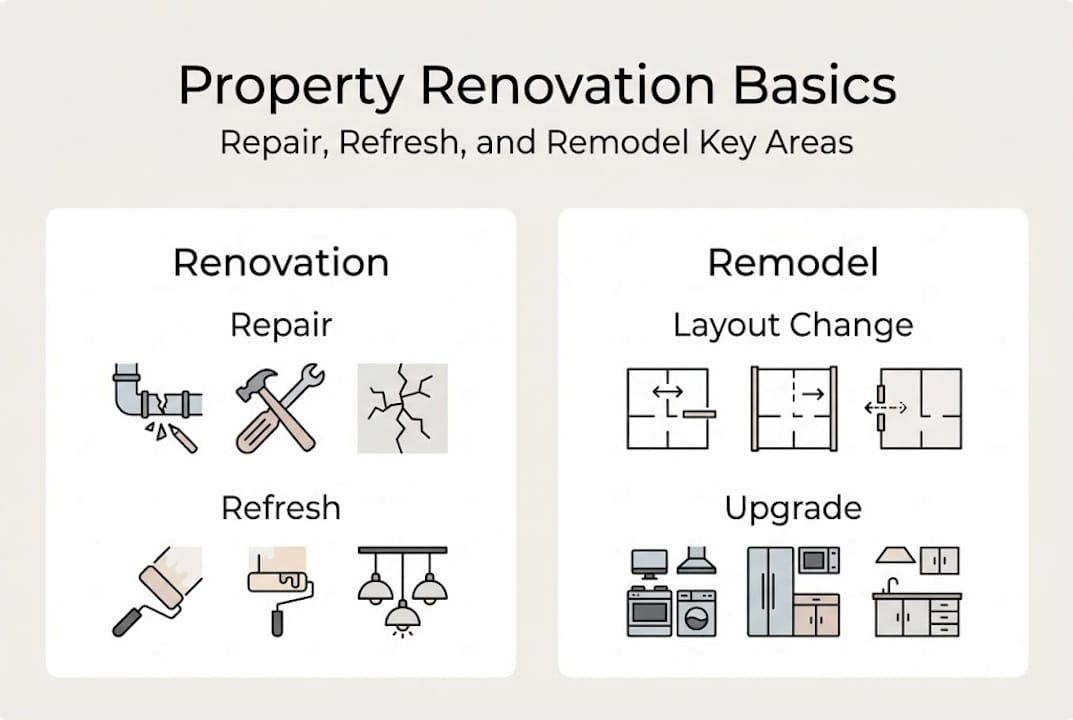
Many homeowners confuse renovation with remodeling and use the terms interchangeably. Understanding renovation terminology helps you communicate clearly with contractors and set accurate expectations. In short, a renovation refreshes what already exists, while a remodel changes how space is structured or used. But both can dramatically transform your home.
Renovations can serve multiple goals at once. You might upgrade your kitchen for both aesthetics and energy efficiency, or repair a bathroom for safety while modernizing its appearance. The goals most homeowners pursue include:
- Improving functionality: Making rooms work better for how your family actually lives
- Increasing energy efficiency: Reducing heating and cooling costs through insulation, windows, or HVAC upgrades
- Enhancing safety: Addressing electrical hazards, structural weaknesses, or outdated plumbing
- Boosting resale value: Making targeted improvements that attract buyers and justify higher prices
- Preserving the home’s character: Restoring original details while modernizing systems
“Renovation is not just about what you see. It is about what your home does for you, how safe it keeps you, and how long it holds its value.”
For homeowners in Lower and Central Bucks County and New Castle, this is especially relevant. Many properties in our area were built decades ago, and learning remodeling explained through a local lens can reveal hidden needs that newer construction simply does not face. Older homes often need more than cosmetic updates. They need a knowledgeable plan.
The property renovation process explained step by step
With a clear definition in mind, here is how a typical residential renovation unfolds from start to finish.
The renovation process follows a structured sequence that keeps projects on track, on budget, and legally compliant. Skipping stages or reordering them is a common cause of costly delays. Here are the eight core stages:
- Planning and vision definition (1 to 6 weeks): Define goals, scope, and preferred outcomes
- Budgeting with a 10 to 20% contingency reserve for surprises
- Structural inspections and permits as required by local Bucks County or Delaware jurisdictions
- Demolition of existing materials, surfaces, or structures that will be replaced
- Rough structural and MEP work: Framing, plumbing, electrical, and HVAC updates
- Insulation and drywall installation to close walls and ceilings
- Finishes: Painting, flooring, cabinetry, fixtures, and trim installed last
- Final inspections, punch list, and cleanup to confirm compliance and completion
Here is how each stage generally breaks down:
| Stage | Typical timeline | Who is involved |
|---|---|---|
| Planning and vision | 1 to 6 weeks | Homeowner, designer |
| Budgeting | 1 to 2 weeks | Homeowner, contractor |
| Permits and inspections | 1 to 4 weeks | Contractor, local officials |
| Demolition | 1 to 5 days | Demolition crew |
| Rough MEP work | 2 to 6 weeks | Plumbers, electricians, HVAC |
| Insulation and drywall | 1 to 3 weeks | Drywall crew |
| Finishes | 2 to 6 weeks | Finish carpenters, painters |
| Final inspections | 1 to 2 weeks | Inspector, contractor |
Understanding your renovation timeline before breaking ground removes a major source of stress. Homeowners who have a clear picture of each phase feel more confident and make fewer impulsive decisions that change scope mid-project.
Good remodel project management also means knowing how to handle surprises without panic. Structural issues behind walls, outdated wiring, and plumbing surprises are common in older local homes. Accurate renovation cost estimation sets realistic expectations from day one.
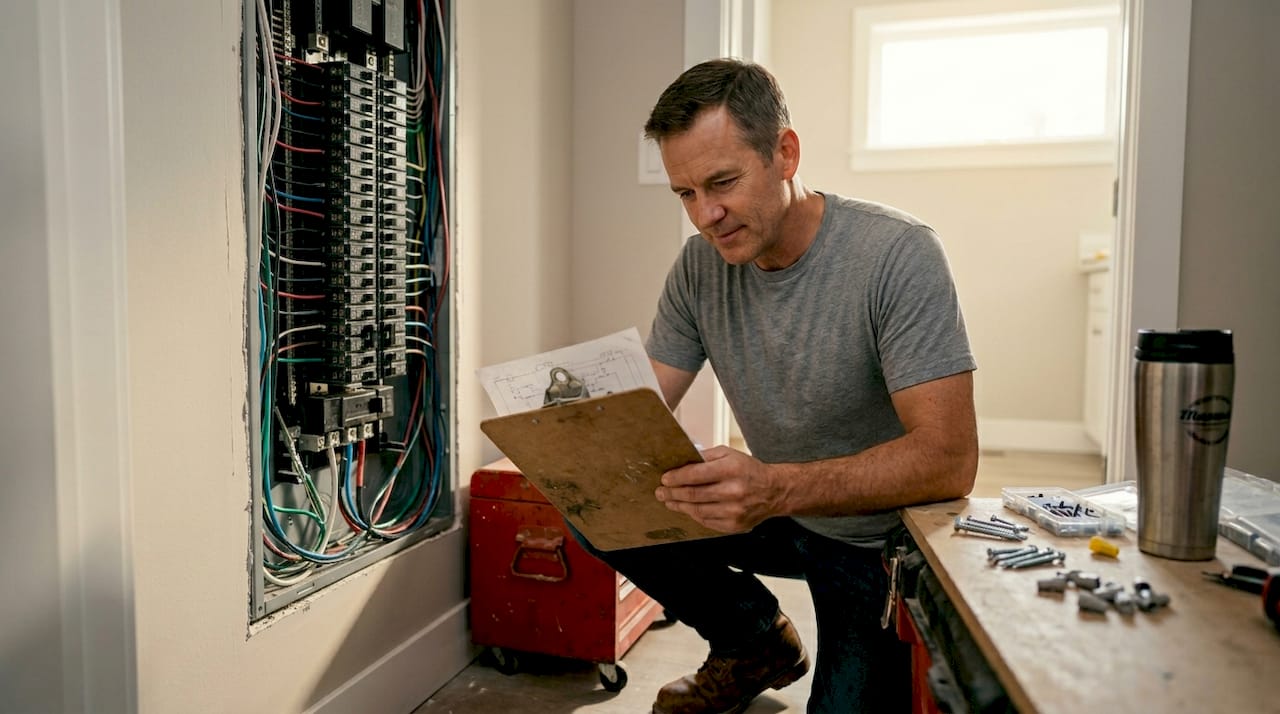
Pro Tip: Always build a 10 to 20% contingency into your renovation budget. Even well-planned projects in older homes encounter surprises behind walls or under floors that require immediate attention.
Renovation vs. remodel: Which is right for your home?
Understanding the process is crucial, but many homeowners get tripped up on whether they need a renovation or a full remodel. Here is how to decide.
The distinction matters more than you might think. According to Bankrate, renovation involves cosmetic refreshes at lower cost and time investment, while remodeling involves structural changes, higher costs, and often requires permits. Here is a side-by-side comparison:
| Factor | Renovation | Remodel |
|---|---|---|
| Scope | Cosmetic updates, repairs | Structural or layout changes |
| Cost | Lower | Higher |
| Permits | Rarely required | Often required |
| Duration | Days to weeks | Weeks to months |
| Best for | Refreshing existing spaces | Changing how a space functions |
Many Bucks County and Delaware homeowners choose a phased approach, tackling one space at a time. This keeps costs manageable and lets you live in the home during the process. A whole-home strategy makes more sense when multiple systems are failing simultaneously, or when you are preparing the home for sale.
Knowing who to hire for renovations is one of the most important decisions you will make. Minor cosmetic work like painting, hardware swaps, or simple tile replacement can be DIY territory for a confident homeowner. But anything involving permits, structural walls, electrical panels, or plumbing connections calls for licensed professionals.
Here are the situations that clearly point toward hiring a professional:
- Moving or removing walls, especially load-bearing ones
- Updating electrical panels or rewiring rooms
- Replacing or rerouting plumbing lines
- Adding square footage or changing the roofline
- Any work requiring a building permit
Pro Tip: Remodels that require permits often uncover code violations in existing systems. Budget extra time and money for these situations, because bringing older systems up to current code is not optional once an inspector is involved.
Expert considerations: Old homes, pitfalls, and maximizing value
While every home can benefit from expert renovation, older homes in our area demand extra care. Here is what you need to know to protect your investment.
Homes built before the 1980s, which is a large share of properties in Bucks County and New Castle, can carry hidden hazards. Before any demolition begins, you need to check for asbestos, lead paint, and moisture or mold issues. According to Fine Homebuilding, skipping this step and removing load-bearing walls without proper engineering, or renovating out of sequence, can push a project 35% over budget or worse.
Preserving the character of an older home while modernizing its systems is an art. Think of it like restoring a classic car. You want it to run like new under the hood while keeping the look that makes it special. That balance is most often tested around window and door upgrades, where energy efficiency goals and historic character can pull in opposite directions.
“In older homes, the most valuable thing a contractor can do is look before they cut. What is behind that wall determines whether your project stays on track or spirals into months of unexpected work.”
Here is a practical checklist for protecting your investment in an older home:
- Test before demo: Commission asbestos and lead paint testing before any demolition work starts
- Hire a structural engineer: Any wall removal or addition needs professional assessment
- Sequence correctly: Rough work before finishes, inspections before closing walls
- Repair before replace: Original windows can often be restored more cost-effectively than full replacement while preserving the home’s character
- Document everything: Keep records of permits, inspections, and completed work for future resale
- Hire local specialists: Professionals familiar with local permitting know what inspectors look for in your jurisdiction
Getting the sequence right is not just a best practice. It is a financial protection strategy.
A local expert’s perspective: What most guides miss about property renovation
You have learned the essentials. Now here is what really matters when renovating or updating homes in our local communities.
Most renovation guides treat every home the same. They do not account for the fact that a 1920s fieldstone farmhouse in Perkasie and a 1970s split-level in Wilmington face entirely different challenges. In our experience working with homeowners across Lower and Central Bucks County and New Castle, Delaware, the two most underestimated factors are local permitting timelines and the age of existing systems.
Homeowners frequently assume a permit will take a week. In some local jurisdictions, it can take three to five weeks, which pushes your entire project calendar back. That reality changes what “ready to start” means. Similarly, the moment you open a wall in a home built before 1960, you are likely to find wiring or plumbing that cannot legally stay as-is once an inspector sees it.
The homeowners who stay on budget and on schedule are almost always the ones who trust renovation professionals with deep local knowledge from the very start. They do not just build contingency into their budgets. They build flexibility into their timelines and their mindset.
Transform your home with expert, local renovation
If you are ready to address your home’s unique renovation needs, connect with trusted professionals who understand local requirements and can help you achieve your vision.
At Precision Remodeling Solutions, we bring hands-on expertise and genuine local knowledge to every project in Lower and Central Bucks County and New Castle, Delaware. Our team handles everything from kitchen remodeling services and bathroom remodeling services to basement finishing and full home additions. We understand the permitting landscape, the age of homes in our communities, and what it takes to protect your investment at every stage. Reach out today for a free project consultation and let us help you build a plan that matches your goals, your timeline, and your budget.
Frequently asked questions
What is the difference between a renovation and a remodel?
A renovation focuses on restoring or updating a space without major structural changes, while a remodel changes the structure or layout and often requires permits and a larger budget. The right choice depends on your goals and how much you want to change about the space.
How long does a typical home renovation take?
Most home renovations take several weeks to several months depending on scope and complexity. The planning phase alone typically takes 1 to 6 weeks before any physical work begins.
What should I budget for unexpected renovation costs?
Always add a 10 to 20% contingency to your renovation budget to cover unexpected expenses, especially in older homes where hidden issues are common.
Are special inspections needed for older homes?
Yes. Homes built before the 1980s often need testing for asbestos, lead paint, and moisture damage before any demolition or renovation work can safely begin.
When should I hire a professional for my renovation?
Hire a professional for structural changes, permit-required work, or anything involving electrical, plumbing, or older home systems. DIY is appropriate only for minor cosmetic tasks that do not affect safety or structure.
Recommended
- Home renovation terms: speak your project’s language – Precision Remodeling Solutions
- Home remodeling explained: what it is and how it works – Precision Remodeling Solutions
- Project management for remodels: a homeowner’s step-by-step guide – Precision Remodeling Solutions
- The Remodeling Timeline: What to Expect from Start to Finish